Posts
-
The Peoples of Tamriel: Everyone Else
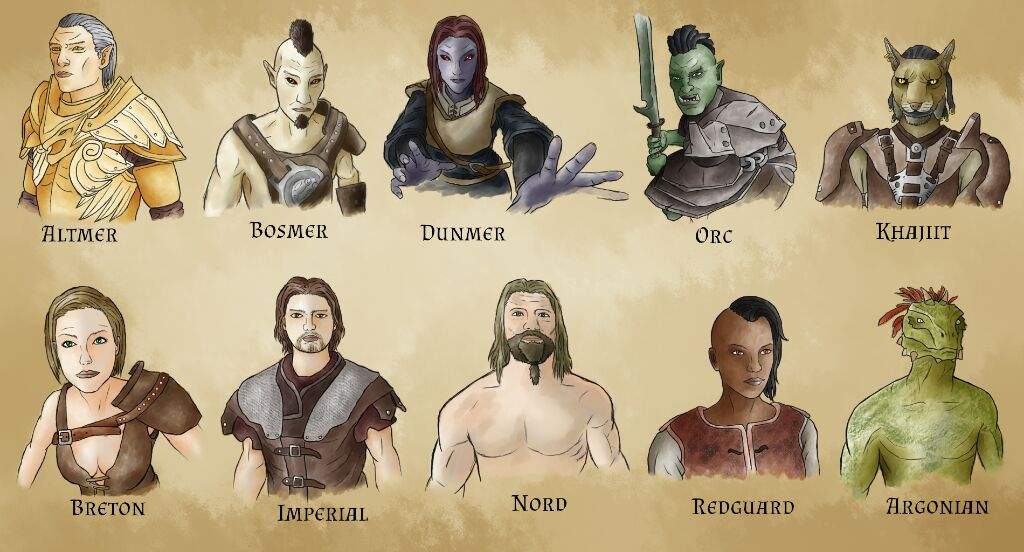
This is the third and final post in a mini-series about bringing the peoples of Tamriel to a GURPS fantasy game. This post deals with anyone who’s neither a human nor an elf.
Scholars from the Empire or the Aldmeri dominion tend to call these people “Beast-Folk”, both because many of them bear an obvious resemblance to some sort of animal and because these exalted nations tend to view them as somewhat less than civilized. Like everyone else, though, they have rich cultures and long histories. They are also quite well-adapted to their home environments.
Argonian (20 Points)
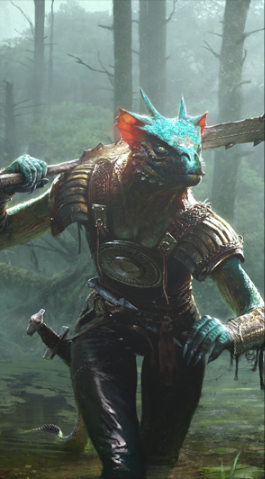
Argonians (or Saxhleel, as they call themselves) are a reptilian people native to the swampy region of Black Marsh. They resemble scaly humans with a tail and a lizard head, and sometimes have feathers or horns as well. Their scales come in various shades of dark brown, gray or green, sometimes marked with patterns unique to the individual.
Well-adapted to their native environment, Argonians are amphibious and highly resistant to disease. They’re known as experts in guerilla warfare, having had to defend their homes against foreign invasions many times in Tamriel’s long and convoluted history.
Argonian adventurers thrive in flooded environments. Those native to Black Marsh are commonly Scouts, Barbarians, or Thieves with some supplemental wilderness survival training. An all-Argonian party can go in underwater adventures without any special magic or equipment!
Advantages: Amphibious {10}; Doesn’t Breathe (Gills, -50%) {10}; Resistant to Disease +3 {5}.
Disadvantages: Cold-Blooded {-5}.
Features: Tail; Body and head armor needs to be adapted to accommodate the tail and unusual head shape. This usually doesn’t cost extra, but might restrict their usage of looted armor.
Other Traits: Argonians are the target of prejudice in several provinces of Tamriel, like Morrowind and Skyrim. In games taking place mostly in those provinces, they would have Social Stigma (Minority Group).
Khajit (25 points)
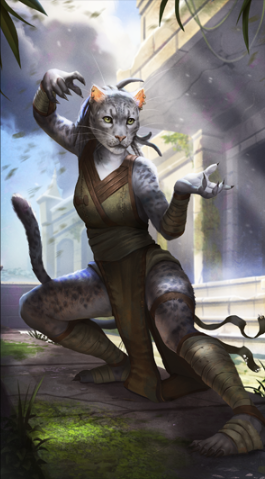
Khajit require surprisingly little explanation for those who are already familiar with Dungeon Fantasy. They’re Catfolk! While an individual Khajit’s appearance is technically influenced by the configuration of Nirn’s two moons when they are born, that’s mostly an attempt by the franchise’s writers to “explain” why the design for playable Khajit characters went from “humans with funny face tattoos” to something that matches the description of DF Catfolk pretty much exactly.
Khajit hail from the tropical region of Elsweyr (pronounced “Elsewhere”). This province is about equally split into an inland expanse of arid badlands, and a lush coastal region criss-crossed by extensive river basins. The former is inhabited by fierce nomadic warriors, the later by sugar cane plantation owners, farm workers, and urban merchants. Those plantations produce Moon Sugar, the region’s chief export. Moon Sugar’s properties vary a lot depending on what source you’re consulting: they seem to range from “it’s just sugar” to “it’s crystallized catnip”. In either case it has many more or less legitimate culinary and alchemical uses. It can also be distilled into Skooma, a drink that’s definitely closer to the “catnip” end of the spectrum and banned in most regions of Tamriel.
Khajit adventurers tend to prefer “skirmisher” professions like Scouts, Swashbucklers and Thieves. Being naturally equipped with claws, they also put greater emphasis in unarmed combat than most, and so also count many Martial Artists among their number.
Advantages: Catfall {10}; Sharp Claws {5}; Sharp Teeth {1}; Fur {1}; Night Vision 8 {8}.
Features: Tail (not prehensile, and easily tucked into armor).
Other Traits: GMs who prefer to use the default Catfolk statistics for Khajit are free to do so, either in place of these or alongside them (as a different variety). Addiction to Skooma is a -15 point disadvantage: it’s incapacitating, highly addictive, and illegal. Addiction to Moon Sugar, if the GM decides it has drug-like properties at all, is worth -5 points in those places where it is illegal, and 0 points otherwise. These can apply to anyone, not just Khajit, no matter what the Altmer try to tell you.
Others
Many allusions are made in Elder Scrolls lore to other “beast-folk” species, though these have never been playable in the games. A lot of them show up as enemies, though.
-
Standard goblins and ogres exist in Tamriel, and are viewed here much as they are in any other setting.
-
Giants have roamed Skyrim since time immemorial, and maintain a wary relationship with its human inhabitants. They have a Paleolithic tribal culture and are known for herding mammoths.
-
The simian Imga share Valenwood with the Bosmer. The Alessian Order that eventually created the First Empire based their religion on the teachings of an Imga prophet.
-
The Hist are sapient trees, said to be the oldest form of sapient life in Tamriel. Most of them are located in Black Marsh, and are at the center of Argonian culture and society.
And so on, and so forth. Throughout various places and times you can also find snake-people (Lamias), slug-people (Sloads), fox-people (Lilmothiit), Minotaurs, and so on. Like elves, feel free to introduce a new variety every time your players think they got it all figured out.
-
-
Let's Read Hell's Rebels: Turn of the Torrent, Part I

It’s been a while since my last post on the Let’s Read Hell’s Rebels series, but the good thing about maintaining my own site is that there are no externally-imposed deadlines and a project is only over when I say it’s over! So let’s keep going!
“Turn of the Torrent” is the second adventure in the path. It expects Pathfinder characters to be 4th level when they start it, and 7th when they finish it. Since I imagine a starting Dungeon Fantasy delver is equal to a 7th level d20 character, the challenges here should still be well within the capabilities of any party that went through Adventure One.
A small recap
As always, check out the project page for links to the previous installments, but let’s summarize what happened so far. It has been 18 months, after all.
The Hell’s Rebels campaign takes place in the city of Kintargo, located in the devil-worshipping fascist nation of Cheliax. The official line is that they’re only “taking inspiration” from the extremely organized nature of the Nine Hells1, but everyone knows the truth. Kintargo in particular has always been particularly ornery about all this, having only been annexed after a long and bitter struggle. Leading that struggle were the Silver Ravens, a group of rebels who have achieved a sort of semi-legendary status in the mind of the citizens of present-day Kintargo.
Our main villain is a man named Barzilai Thrune, a narcissistic sociopath who delights in grandstanding, engendering acts of large-scale performative cruelty against minorities, and surrounding himself with equally despicable lackeys2. He found out Kintargo is an auspicious site for a ritual that could turn him into a minor god, and got himself appointed Lord Mayor of the city. After having anyone who could oppose him killed, he’s been amusing himself by making ever more absurd proclamations and otherwise oppressing his constituency. All of them will die when the ritual is done, so why worry?
The PCs get caught up in all of this and by the end of Adventure One find themselves leading the group that has the best chance of freeing Kintargo from Thrune’s grasp: the reborn Silver Ravens. In fact, they’re now big enough that their current coffee-house-basement hideout is getting a bit cramped.
Proclamation The Ninth
The adventure kicks off with Barzilai’s Ninth proclamation, which targets the Hellknight Order of the Torrent. All their assets are confiscated and their members declared outlaws. Anyone caught harboring one of them will be similarly declared a criminal.
The Hellknight orders are kinda like elite law-enforcement agencies associated with the government of Cheliax. Most Hellknights are as evil as the name implies, but until recently there was one notable exception.
The Order of the Torrent was a search-and-rescue unit based out of Kintargo, and was the only one composed mostly of Lawful Good folks. Predictably, it was also by far the smallest and less politically influent of the orders, with only 23 members total. Barzilai targets them here because he wants to gift their assets to his buddies from the Order of the Rack3. By the time the proclamation is announced his underlings have pretty much finished the Order of the Torrent off.
After this bit of exposition we get a table of rumors that mostly serves to foreshadow missions the PCs will undertake later in the adventure, with a false rumor planted in there that will make them distrust the Order of the Torrent if they believe in it. There’s also a bit about the toll for Kintargo’s main bridge being drastically increased, which is not something that would inconvenience the PCs overmuch but which will cause plenty of unrest among the citizens.
A Cousin’s Plea
Once the party is done with rumors, they’re contacted by a woman named Setrona Sabinus, current proprietor of one of Kintargo’s oldest taverns, the Tooth and Nail. She wants then to find her missing cousin Octavio, who happens to be the leader of the Torrent. He’s gone missing since the proclamation, and she imagines he might be laying low in a remote shrine located to the south of the city.
Optionally, the GM can have Setrona ask them to first look for her cousin in a sanctioned excruciation that will take place that day, since she doesn’t actually know if he’s been captured or not. Unlike the unsanctioned variety the PCs dealt with in the previous adventure, this one is conducted and guarded by actual dottari guards and Rack Hellknights (four of each).
Octavio isn’t here, but a lower-ranking member of the Torrent is. PCs can try to rouse the crowd and browbeat the guards into postponing the proceedings, or they can charge and start a fight.
This section also includes a note on how these frequent excruciations will actually bolster support for the Ravens. At some point Barzilai will realize this and stop them.
Conversion Notes
The four dottari guards wear mail suits and carry halberds and bows. The Rack armigers have plate, large shields and broadswords. Building them with the Squire template plus 25 points or so seems about right: they should be strong and skilled physical combatants.
None of the two groups will fight to the death - in fact, they’re not all that united. The dottari will perform a fighting retreat if one of them drops, and will rout if two of them fall. The knights will retreat as soon as one of them suffers a major wound. Either group will leave the other to its fate when that happens. This means even a Pathfinder party can make it out of this CR 9 encounter alive if they are lucky and focus fire on one opponent at a time. DF delvers should have quite a bit less trouble surviving the encounter, though it’s no longer the cakewalk their last excruciation was.
Shrine of Saint Senex
This is the shrine where Octavio is supposed to be hiding out. Most of it is underground, but there’s a small above-ground area inhabited by two hippie-looking oracles.
The pair is all of remains of the saint’s cult. They know Octavio is hiding underground, but the PCs must first gain their thrust. Bringing Setrona along will make this much easier. Even if the PCs manage to get a friendly reaction out of the oracles, though, they still insist the party go through the “trials” awaiting them underground to prove they are worthy.
There are two rooms in the temple’s underground. The first contains a simple puzzle, with a fight against a rope golem if the party gets it wrong. The second contains Octavio, hiding out in a crypt full of mummified drowned sailors. He’ll mistake the party for Thrune agents unless he recognizes them using the campaign’s notoriety mechanics, or unless Setrona is with them. Yes, this mini-dungeon can be entirely “solved” without a fight if the party brings Setrona along.
Octavio Sabinus is a Lawful Good Hellknight4, and he will be amenable to joining the Ravens as long as the PCs can prove to him that the group is a) capable of opposing Thrune without always resorting to violence and b) making sure his men are safe. To that end he asks the party to rescue those men from the Old Kintargo Holding House, which is detailed later in the book. He will remain hiding in the crypt until that is done, and will join the Ravens as a unique ally when the PCs complete the mission. Completing it in a subtle manner will make him even more loyal to the cause.
Analysis and Review
The paragraph above is exactly where part 1 of the adventure ends. Yes, it’s basically 90% background info and exposition. The playable part consists of an optional combat encounter which the book doesn’t recommend including and what’s essentially a one-room dungeon bookended by two friendly chats assuming the PCs do the smart thing and bring Setrona along. It could take less than half a session, start to finish.
There’s a lot more detail about the rescue mission Octavio wants the PCs to perform, but even that is only presented in part two. The general verbosity and somewhat poor organization I’ve seen in official Pathfinder adventures rears its head again.
The optional brawl against the dottari and armigers is somewhat easier for DF delvers, and would be a good bit of fun if your group is in the mood to kick some fascist ass. If they’re anxious to get on with the main story it’s best to skip the encounter, have Setrona invite herself to go with the party and get to the talk with Octavio as soon as possible.
We’ll read through Part 2 in the next post in this series.
-
The Peoples of Tamriel: Elves
This is the second post in a series about the bringing peoples of Tamriel to a GURPS fantasy game. This post deals with elves, just as the first one dealt with humans.
Elves in Tamriel
As it happens in most fantasy settings, the Elves of Tamriel1 are a bit taller than its humans on average, and have large almond-shaped eyes and pointy ears. They’re also more inherently magical than humans, though that extra magic tends to conform itself to the environment a given elven people occupies over time.
Like humans, each elven people is associated with a different region of Tamriel, briefly described in their template. Each template also includes “typical” cultural traits and adventuring professions for a native of that region, which could apply to anyone born there.
Most elven people live much longer than humans, but in a typical Dungeon Fantasy campaign that’s not worth any points2.
Altmer (25 Points)
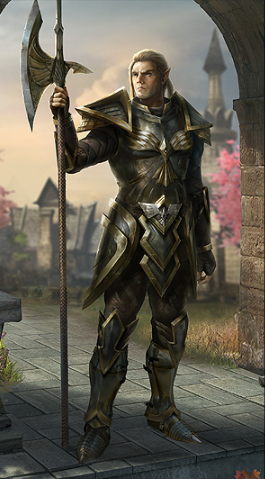
High Elves in all settings tend to have a reputation as snobs, and these guys are no exception. Altmer are on average taller than humans, with golden skin and white or golden hair. Their eyes are usually gold, amber or green in color.
Altmer are the original elves, at least according to their own traditions. All the other elven peoples originated from groups of Altmer dissidents who left their homeland of Summerset Isle and migrated elsewhere. While individual High Elves vary a lot in their outlook, the highly stratified society of Summerset Island is founded on the idea that they’re better than everyone else.
Altmer religion teaches they are the direct descendants of gods who were tricked into giving up their divinity so the world could be created. They ruled a continent-spanning empire in Tamriel long before humans arrived on the scene, and the islands don’t lack for extremists who want to bring the good old days back at the expense of everyone else. The latest of these are the fascist Thalmor, who by the events of Skyrim are alarmingly close to conquering Tamriel.
The younger generations tend to be much more egalitarian and open-minded, as do Altmer of all ages who live outside of Summerset. Their innate facility with magic and the wide availability of quality training in Summerset means Altmer adventurers are commonly Wizards or members of other spellcasting professions (like, say, Magic Archers). Even High Elves who are nominally knights or swashbucklers know a few spells.
Advantages: Magery 1 {15}; Energy Reserve (Magical) 3 {9}; Better Power Items {1}.
Other Traits: Some level of Intolerance is extremely common among Thalmor members, and even those Altmer who oppose their ideology might still be prone to bouts of well-meaning condescension that translate into an Odious Personal Habit.
Bosmer (25 points)
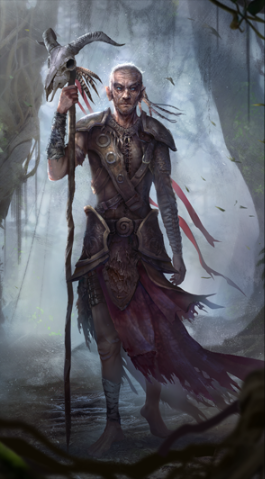
Bosmer or Wood Elves call the temperate, heavily-forested province of Valenwood their home. Their appearance and behavior are pretty much those of cliche wood elves from other settings: they’re all about archery and protecting their forest homes.
Many Valenwood Bosmer go even beyond the cliche by becoming members of the Green Pact, a religious philosophy that exhorts them to avoid harming plants and natural environments, never take the shape of beasts, and never kill wastefully. Green Pact followers are strict carnivores who feel morally obligated to eat or otherwise make use everything they kill - for the most extreme among them, that includes people. They can’t make any objects from plant matter, but can use those made by others just fine.
Scouts and Druids are by far the most popular professions for Bosmer adventurers.
Advantages: Animal Empathy {5}; Animal Friend {5}; Forest Guardian 2 {10}; Resistant to Poison +3 {5}.
Other Traits: Disciplines of Faith (Green Pact) is worth -15 points and is common in Valendood proper. Green Pact extremists also have Odious Personal Habit (Cannibal) for another -15 points and a -3 to reactions from anyone who is not similarly inclined. This should probably be restricted to NPCs. Bosmer PCs might also opt to take plain old Sense of Duty (Nature) instead or not take any of these disadvantages at all, particularly if they were raised outside of Valenwood.
Dunmer (20 points)
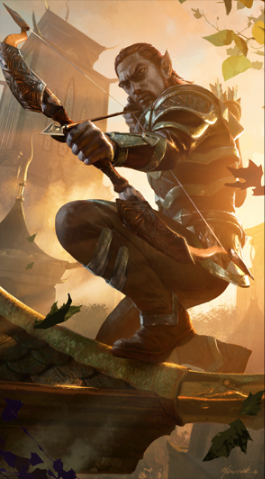
Dunmer, also known as Dark Elves, have ash-colored skin, black, dark brown or white hair, and red or amber eyes. They hail from the volcanic land of Morrowind, which they share with giant mushrooms, giant insects, and a whole lot of ash. They are widely known as fierce warriors and aggressive spellcasters, shaped by their harsh environment and cutthroat politics.
Morrowind is dominated by four noble houses who divide the important functions of society among themselves. Needless to say, they constantly scheme against each other: this is a realm whose premier law enforcement agency is a guild of assassins. They spent much of their history worshipping a pantheon that was basically an ascended adventuring party. After the events of Morrowind they mostly revert back to their old gods. In both cases ancestor worship remains an important component of their religion.
Dunmer adventurers tend to be Knights and Wizards, or professions that combine both (like the Mystic Knights from Pyramid #3/13). Thieves and Assassins (or even Ninja!) are also common. Your typical Dunmer wizard tends to prefer elements other than fire for their damage spells, since they expect to be slinging those at other Dunmer in the course of their many violent intrigues. Their tradition of ancestor worship means necromancy is looked upon a lot more favorably in Morrowind than it is elsewhere.
Advantages: Damage Resistance (Limited, Heat/Fire -40%) 5 {15}; Magery 0 {5}.
Other Traits: Getting your PCs tangled in Dunmer House politics is an excellent way to introduce all sorts of social traits like Enemies, Allies, Secrets, Patrons and Contacts in a game that didn’t include them previously.
Orsimer (21 points)
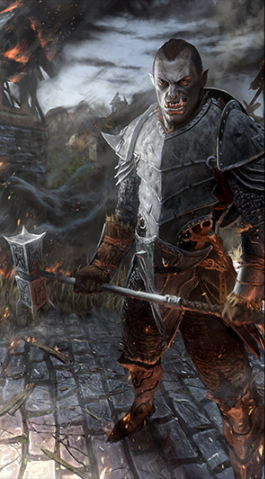
In Tamriel, Orcs are Elves too! They were almost universally reviled for a long time, but their loyal service to the Empire over the years earned them acceptance. They look big, green, and tusky, and unlike other Mer live about as long as humans.
The orcish homeland isn’t an official province, but rather a series of mountain ranges that falls within High Rock, Skyrim and Valenwood. Their capital is the city of Orsinium, which has been sacked and rebuilt multiple times in different locations throughout the history of Tamriel. Traditional orcish culture makes Nords seem like peace-loving softies. They basically worship the God of Having A Chip on Your Shoulder.
Orcish adventurers favor big, brawny professions like Knight and Barbarian, though orcish Artificers are also surprisingly common and tend to specialize either in smithing or in alchemy.
Advantages: Focused Fury {1}; Great Rage 1 {20}.
Other Traits: Both advantages above are from Dungeon Fantasy Denizens: Barbarians. If the campaign takes place in a time or place where orcs are particularly reviled, they would also have an appropriate Social Stigma. Like Nords, though, orcish Barbarians in campaigns taking place in their homeland aren’t considered a Minority Group. Some level of Berserk is quite common, though.
Other Elves
The templates above are just for the elves that have been traditionally playable in Elder Scrolls games. There are many, many more:
- In Tamriel, dwarves are elves! The Dwemer vanished way back in the First Age and left a whole bunch of extensive, steam-powered underground complexes whose advanced machinery is still pumping after all these millenia.
- The Falmer, or Snow Elves, dominated Skyrim at the dawn of the First Age and were displaced by the conquering Nords. This led to an ill-fated deal with the Dwemer that eventually turned most of them into blind cave-dwelling cannibals.
As usual for Dungeon Fantasy, every time your PCs think they know all elven subtypes, feel free to introduce a couple more.
-
The Peoples of Tamriel: Humans
It appears someone finally took me up on my offer to write a more detailed post on any aspects of my One-Post Skyrim adaptation. The requested topic were racial templates, so this is what I’m going to write about it here.
Scholars in Tamriel tend to divide its peoples into three main classifications: “Men”, “Mer” and “Beast Folk”. This pretty much means Humans, Elves, and Everyone Else, and as usual for this kind of medieval-ish scholarship is as much a political construct as a biological one. This post deals with humans.
My primary source for this article are the wonderful Unofficial Elder Scrolls Pages, which have detailed descriptions of the lore and mechanics for all games in the franchise1.
Humans in Tamriel
Humans, being humans, don’t have any “mandatory” traits and as such their “templates” technically cost 0 points. Each of the human peoples described here is associated with a specific region of Tamriel where it makes up the majority of the population, so their descriptions also include a bit of info on those provinces and a small list of traits considered typical for their culture and common adventuring professions.
It’s entirely possible for a human character to not have any of their culture’s “stereotypical” traits, or to have an entirely different set more in line with the region they actually grew up in. And the list of common adventuring professions in no way restricts the professions a character may choose from. If you want to be a Nord Wizard or a Breton Ninja, go for it!
Bretons
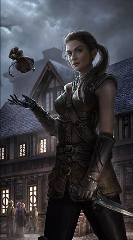
Bretons are humans native from the province of High Rock, the region of Tamriel that most resembles your typical Arthurian pastiche. They are commonly fair-skinned, with hair that ranges from black to blond. Many demonstrate a remarkable facility with (and resistance to) magic, which is alternatively attributed to their ancient druidic traditions or to elven blood depending on who’s doing the attribution.
The most common way for your average High Rock citizen to go up in life is to impress a noble from its many squabbling fiefs by performing meritorious deeds. High Rock is a big exporter of questing Knights and Holy Warriors, and of spellcasters who take on Druidic trappings.
Traits: Magery and Magic Resistance (Improved) are extremely common among the natives of High Rock.
Imperials
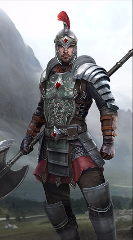
Imperials hail from the region of Cyrodiil, right in the middle of Tamriel. They are called that because in most Elder Scrolls games their homeland is also the seat of the Empire.
The Empire is the third political entity to bear this name in Tamriel’s history. It’s a sophisticated, cosmopolitan society whose seat of power is located in a majestic city and whose hegemony is ensured by a combination of diplomacy, trade, and the military might of its infantry legions. In other words, they are basically off-brand Romans.
Imperial adventurers who hail from the ranks of the legions are most often Knights or battle Wizards. Other popular delver professions are Scholars, Clerics and Bards. The “visiting wise man from Cyrodiil” looking for a lost ruin is common enough to have become something of a cliche.
Traits: Imperials have a reputation for being well-spoken and charismatic. They often have Charisma, Born War Leader, Business Acumen or Smooth Operator, as well as points in the skills boosted by those talents.
Nords
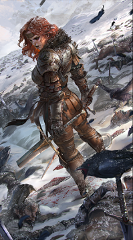
Nords are our off-brand Vikings, as fond of song as they are of fighting. We learned plenty about their homeland of Skyrim in my last post.
The inhabitants of Skyrim have a greater distrust of magic than those of most other provinces, and prefer facing their foes head-on. As such, Knight and Barbarian are some of the most common adventurer professions for them. Bards are also quite popular, both as entertainers and as keepers of history.
Traits: Nord barbarians from Skyrim don’t carry a Social Stigma in campaigns that take place there, and should replace that with 10 points in other disadvantages. Intolerance (Magic Users) or Compulsive Carousing fit the stereotype. Some level of Temperature Tolerance (Cold) isn’t out of place in even the most “urban” Nord.
Redguards
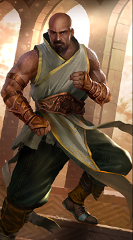
Redguards are tall, well-built humans with dark skin and curly black or red hair. They landed in the arid province of Hammerfell, and made if their home over the centuries. Their culture seems to take inspiration from many different African sources, but ends up looking mostly Moorish, at least superficially.
Redguards are know as the most talented warriors in Tamriel, which is saying a lot given the continent also has Orcs and Nords in it. They make better skirmishers and independent agents than rank and file troops, and during most of the games have a long history of loyal service to the imperial line of Tiber Septim.
Redguard adventurers most often belong to the fightier professions. Swashbucklers and Scouts are the most common, with Martial Artists and Knights following close behind.
Traits: The most iconic Redguard trait is Combat Reflexes! Redguards also prize skill with the sword, so even less martial Redguard adventurers are likely to have some training in that area.
Other Humans
These four human origins are just the ones that are playable in most of the Elder Scrolls games. Several others are mentioned but not traditionally playable:
- The Nedes had a large civilization in the time before the First Age of Tamriel, which entered into decline and was eventually absorbed by several other of the playable cultures.
- The silver-skinned Kothringi of Black Marsh are said to have died out from the Khanaten Flu in the middle Second Age.
- The neighboring continent of Akavir is home to a large human civilization who once successfully invaded and conquered Tamriel, starting its Second Age. In keeping witht he “swipe from real world cultures” theme, the Akaviri are off-brand Imperial Japanese.
Tabletop games set far enough into the past could certainly allow for Nede or Kothringi PCs, and Akaviri PCs would be plausible at almost any time.
-
Sometimes too detailed, in fact. ↩
-
One-Post Skyrim
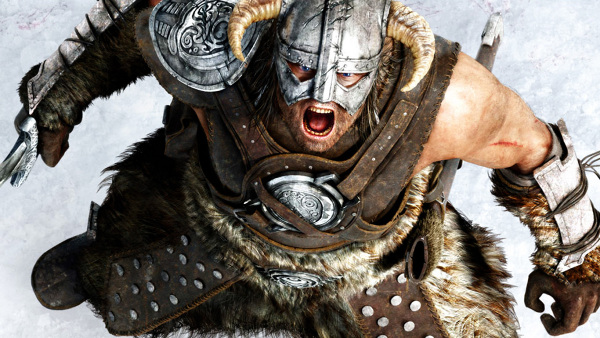
ONE POOOOOOOOOST! (image source) I’ve been playing a lot of Skyrim lately, and it occurred to me that adapting that to GURPS could be a fun project. So I’m going to do that in this post.
And when I say “in this post”, I mean that literally! I do not intend to spend the next three years writing about this like I did with my Dragon’s Dogma project. This means I’m going to cheat like a cheating cheater and take shortcuts. Whenever I can get away with giving page references to published books or links to other articles, I will do so. The result should still resemble the thing I’m trying to adapt, and those who disagree with that can still use the post as “Iteration One” in their own more elaborate efforts.
Themes and Gameplay
Before we can start messing about with rules we have to take a look at our source material, which in this case is the Skyrim computer game (written in bold from now on to differentiate it from the Skyrim region). Skyrim is just one part of the extensive Elder Scrolls franchise, but I’m going to restrict myself to just the one game as source material. Consider it my first cheat.
If I were to describe Skyrim in one sentence, I’d call it the video-game version of a sandbox campaign with a heavy power fantasy element.
How Skyrim a sandbox campaign? It has pretty much the exact same core gameplay loop. You create a character to your liking and wander around a large region peppered with dungeons and other interesting places to visit. You add to your to-do list by talking to NPCs and receiving quests from them, or by overhearing and reading rumors which point you to particular dungeons. While wandering around the map you also periodically run into random encounters. There’s technically a “main quest”, but the game doesn’t pressure you into completing it any more than it does any other quest, and completing it doesn’t end the game.
How does Skyrim give you a power fantasy? Through the rules, by using a skill-based system that gives every player character access to every skill in the game. And through the story, by allowing PCs to play through multiple quest-lines that would usually each take up a whole character’s career. Not only can you become a legendary fighter, mage and thief, you can also become the head honcho of the Fighters’, Mages’, and Thieves’ Guilds. It also doesn’t make you wait until you’re “powerful enough” to give you access to its more “epic” storylines: you kill your first dragon quite early in the main quest, interact with several deities starting not long after, take on (or join) a cabal of millenia-old vampires who want to blot out the sun, and so on.
Choice of System
So how are we going to adapt this for the tabletop? We want something whose “feel” approaches the one I described above for the original game. I’m going to use GURPS Dungeon Fantasy because of course I will, but there are good reasons for choosing it aside from my fanboyism.
I believe GURPS is particularly well-suited here because it allows for considerable flexibility in character creation. Dungeon Fantasy with its insistence in sticking to templates is a little less flexible, but that restriction is easy to relax and we’ll be doing so here.
Other advantages of Dungeon Fantasy: its 250-point starting heroes allow players to feel powerful and take on “epic” challenges right away, and it has ready-made mechanics for most of the situations routinely encountered by Skyrim players.
Also of note are the things that will be different from the computer game: it will be aimed at a whole party of PCs instead of a lone hero and it will use the standard pace of DF character advancement.
Places
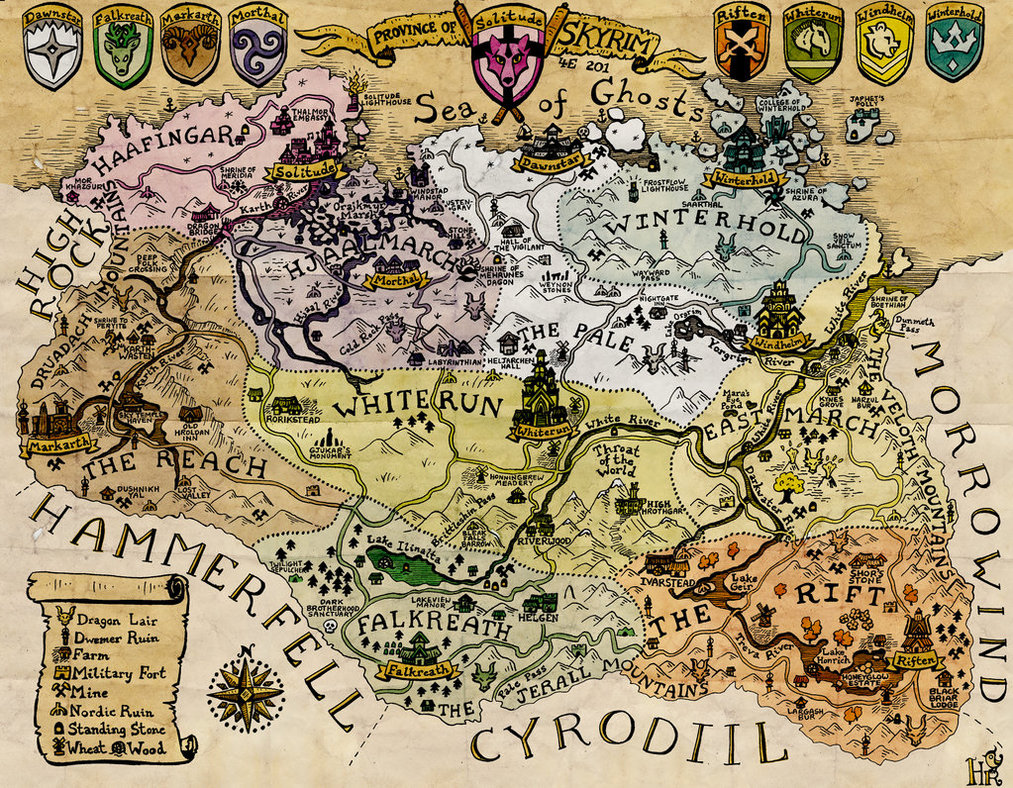
A map of Skyrim (image source) The place we’re concerned about is Skyrim! This is the “frozen north” of the continent of Tamriel, a roughly rectangular region bounded by mountain chains to the south, east and west and by the Sea of Ghosts to the north.
In-game Skyrim is around 40 square kilometers in size, but that’s obviously because it’s highly “truncated” as is usual for this type of game. There’s no published official size, though it appears someone has managed to extract a halfway plausible measurement over on Reddit that indicates Skyrim would be about the size of Poland. That means its linear measurements would need to be in the order of 100 times larger than their in-game size: about 500km tall and 600km wide1. That’s quite large! It would take weeks to hike from one end of Skyrim to the other, and that’s ignoring things like monster or bandit attacks.
The climate near the southern border is on the cold end of temperate. As you go north, both elevation and average temperature drop. Grasslands and temperate forests give way to conifers and frozen marshes, then tundra and fjords on the northern coast. The topography is quite “wrinkly”, with several minor mountain ranges dotting the interior of the province. There are two river systems, one to the southeast and another to the northwest, both flowing north to the sea.
Politically, the region is divided into nine holds, which you can see in the above map. Skyrim is officially a province of the Cyrodillic Empire, having joined it in the distant past through alliance rather than conquest. The Imperials are basically off-brand Romans, and you could explain any significant departures from the Viking cultural baseline through this centuries-long association.
Settlement distribution follows the same model as the one I described for Gransys, and since the in-game map isn’t as aggressively minimalist as that of Dragon’s Dogma you can have a better idea of where they would be. Hold capitals are usually major cities, and the other settlements that appear in the game would mostly count as “towns”. Villages, as usual, are everywhere, though I guess Whiterun with its fertile plains has a lot more of them than The Pale. Towns and cities are linked by a fairly good, though winding, road network.
People
Though Skyrim is the home of the Nords, all of Tamriel’s peoples find themselves represented here one way or the other. Players should be able to create characters belonging to any of them. Since all of them will live in Skyrim and be part of its society, that’s where we will focus our attention.
Nords are basically off-brand Vikings. Hall of Judgment and Dragon Heresy contain great descriptions of a fantasy Viking culture that would be an excellent starting base for Skyrim’s Nords. The main differences are that there are no thralls in Skyrim, and the Nords follow the setting-specific Nine Divines instead of the Aesir. Jarls and Karls work as in HoJ/DH, but Thane is a formal position granted by a Jarl to people who have done a great service to the kingdom, roughly equivalent to a knighthood in importance. Thanes are expected to continue performing the services that gained them the title in the first place, but don’t much else in the way of formal obligations.
Law and order is a bit more formal in Skyrim than in the other settings I mentioned, possibly because of Imperial influence. Each hold keeps a permanent contingent of guards responsible both for repelling external attacks and for keeping the peace internally. Criminals must still pay a bounty commensurate with their crimes, but that bounty is paid to the hold, which presumably then sees that the wronged party is properly compensated. Those who can’t pay their own bounty usually end up rotting in jail for a commensurate amount of time. A Thane who gets caught committing a crime might be able to use their station to escape punishment, but this too has its limits. Commit enough crimes and the Jarl declare you an outlaw and start offering a bounty on your head: that’s how bandit gangs are born.
Character Creation
Starting characters are built on 250 points, and are assumed to be somewhat experienced adventurers already. Players may use any DF professional template they wish, but are explicitly not restricted to only the traits in their chosen template during character creation or advancement. Completely freeform character creation is also allowed. I’m aware this might open up some unexpectedly powerful combinations - adjudicating those is left as an exercise to the GM.
Racial templates are easy:
Nords, Bretons, Imperials and Redguards are all human.
Skyrim also has a whole lot of elves, but so does DF, and they map almost directly to one another! Altmer are High Elves, Bosmer are Wood Elves, Dunmer are Shadow Elves. Orcs are technically elves in Tamriel, and are best represented by the Half-Orc template. Even Dwarves are a kind of elf in this setting, but there are none left alive.
Khajit are obviously Catfolk, and Dragon-blooded make passable Argonians if you replace the fiery breath and Reputation with Doesn’t Breathe (Gills, -50%).
Further tweaking of all of these is not only possible but advisable, and is left as an exercise for the reader.
Magic works differently than standard Dungeon Fantasy. Skyrim is effectively an agnostic Dungeon Fantasy setting that takes the Simple Option for spells and the Cool Option for non-spell powers. Even characters who start off without any Magery may buy it with earned character points. Any enemy group with more than a handful of members is likely to contain one or more spellcasters, and many people know a useful spell or two even if they don’t call themselves wizards.
The Voice
The Voice should be modeled as a form of Sorcery, should a GM with to include it. Each Shout is a separate power that comes in three levels, corresponding to the number of words known or utilized. Students of the Voice rarely learn more than one or two Shouts, buying them directly and paying the full cost. Knowing even one makes you quite a bit more dangerous than you would be in the computer game, since there are no cooldowns in the default Sorcery rules!
And since I know you’re going to ask: no amount of Unusual Background can make someone Dragonborn. This is a trait best assigned by a GM who wishes to make it the focus of the campaign. The in-game effect is that you get a chunk of points to spend on the Voice every time you kill a dragon, and can use them to buy Talent or Sorcerous Empowerment for Voice powers.
Creating specific Shouts is left as an exercise for the GM, but here’s an example:
Unrelenting Force (Fus-Ro-Dah)
- Keywords: Obvious
- Full Cost: 15/30/45
- Casting Roll: None. Use Innate Attack (Breath) to hit.
- Range: 20m
- Duration Instantaneous.
Projects a cone of force in front of the user that pushes everything in its path away. The force doesn’t damage its targets directly, but can throw them great distances and will definitely hurt if it knocks someone into a wall or over a ledge.
Does 2d, 4d or 6d crushing damage with the No Wounding and Double Knockback modifiers, out to a range of 20 meters. The cone is 3m wide at maximum range. Diffuse targets take full damage!
Traits: Crushing Attack 2, 4 or 6 with (Cone, 3m, +80%; Double Knockback +20%; Variable + 5%; Blockable -5%; Reduced Max 1/5, -10%; No Wounding except versus Diffuse targets -25%; Sorcery -15%;)
Stuff
For the most part, you should be fine using the default equipment list for either version of Dungeon Fantasy. Applying the modifiers described in Hall of Judgment on top of that will get you something that’s a lot more Nord-flavored.
The computer game made a big deal of organizing weapons and armor in tiers that used different materials, but those can be replaced with the special DF materials and modifiers without losing much of anything - particularly if you have DF 8: Treasure Tables or DF Treasures 1: Glittering Prizes, which have a list of “impossible materials” that work as supernatural embelishments to weapons and include several familiar names (glass, ebony…).
Adventures
Skyrim is lousy with ancient Nord burial mounds and tomb-complexes, each filled with traps, treasure, and lots of draugr who will be very angry when they see you taking their stuff. If grave-robbing is not your thing, you can hunt down bandits or murderous fauna for bounties, enter the service of an organization such as the Companions or the College of Winterhold2, or try to talk a Daedric lord or twelve into revealing where their pet artifacts are located.
Skyrim’s story takes place during a time when the Empire is in decline due to a prolonged conflict with the Aldmeri Dominion and the fascist Thalmor that govern it. Most of its other provinces have either been conquered by the Dominion or seceded when the Empire signed a peace treaty with the Thalmor that made several heavy concessions. There’s an ugly civil war going on in Skyrim between the Imperial legions and a rebel faction who call themselves the Stormcloaks and seek to secede from the Empire as well. The Thalmor play one against the other from the shadows. Taking part in the civil war could make for an interesting campaign, but it’s also perfectly possible to play during a more peaceful time either before or after the game’s story.
No matter where you wish to go, simply getting there is an adventure in itself. Using the wilderness survival rules from DF 16 or Hall of Judgment is strongly encouraged. If you’re playing in the same time frame as the computer game, make sure to include dragons in your wandering monster tables3.
Conclusion
So this is a Skyrim adaptation in one post. If you would like me to revisit one of the topics here in more depth, feel free to drop me a comment!
subscribe via RSS