Posts
-
On Cyberpunk
There’s this William Gibson short story, from way back at the beginning of his career, called “The Gernsback Continuum”. You could argue it’s a neat encapsulation of everything the cyberpunk literary movement was all about.
It’s about a photographer who gets hired to travel through the US and take pictures for an art book, of buildings built using this very specific sort of 40’s-50’s architecture. You know the one: aerodynamic fins and flanges everywhere, meant to look “futuristic” in a robots-and-spaceships kind of way. Of course, the story takes place in the 80s so everyone there knows the future these buildings were alluding to never came to pass. That’s what the art book is going to be about, that nostalgic lost future feeling.

Sometimes the fins have flanges. Our protagonist gets so into it that he starts hallucinating that future. Silver teardrop-shaped cars driving on the highway or flying in the sky above it. A plane that’s a huge flying wing with twelve propeller engines, two squash courts and a ballroom.
It culminates in an entire city (Tucson, IIRC) visible on the horizon being replaced by a version of itself that’s all impossibly tall flanged towers linked by crystal roads and swarming with those silver cars and with Beautiful People in Togas. There’s a couple of them right beside our protagonist, though they don’t see him. They talk to each other with sweeping gestures and bold statements that can be summarized as “Isn’t the future great? And it’s all ours!”
At that precise moment, our protagonist freaks the fuck out. I was a dumb teenager when I first read this story, so I didn’t quite get what was so horrible about that moment. Now I do. Every one of those Beautiful People in Togas is white, blond and blue-eyed. What the heck did they do to everyone else? Perhaps that lost future never coming to pass isn’t a bad thing at all1. In the end the protagonist gets rid of the hallucinations through a steady diet of crappy media and headline news about the oil crisis.
The story’s title refers to Hugo Gernsback, the man responsible for editing the science fiction magazine Amazing Stories from 1926 to 1936. I’m guessing everything our poor photographer sees comes from that magazine, too, or from other publications influenced by its style stretching into the 50s. Gernsback also lends his name to the Hugos, one of the two top literary prizes in the field of SF.
The cyberpunk movement, whose writers would end up winning quite a few Hugos themselves, was in large part a reaction to this style of science fiction. As the introduction to Guardians of Order’s Ex Machina so aptly puts it, cyberpunk stories were about outsiders trying to survive and find happiness in the face of an oppressive society. Cyberpunk protagonists, Gibson’s in particular, were often criminals, drug addicts, poor, kids, people of color, or more than one of the above at the same time.
The worlds of classic literary cyberpunk had all sorts of social problems that were directly inspired by the present in which those stories had been written. They weren’t exactly extrapolations, but rather commentary on the present. Since the stories were set in the future, I think they also ended up presenting us with another message: those issues don’t just go away because technology advances. If you ignore them today, they’ll still haunt you tomorrow.
By now I’ve read a bunch of online discussions where people say the cyberpunk genre is dated or outright obsolete. We’re no longer in the Eighties. Things have changed. The tech looks either retro or absurd to our modern eyes, the USSR imploded, Japanese companies didn’t take over the world.
I feel this argument is kinda missing the point. The specific technologies and setting elements that appear in classic cyberpunk stories are indeed a product of their time, but they’re just props. The themes and motifs behind those props are timeless. It’s quite possible to write a story with more up-to-date props that still feels cyberpunk. Heck, Gibson himself never stopped doing exactly that.
Overly focusing on the props is a mistake a I feel a lot of people make. These people include a good number of RPG writers and fans, unfortunately. I clearly remember reading an article that talked about just such a thing once, but unfortunately I can’t remember where. So when I next talk about this, I’m going to be writing my own version of that article.
-
Me not getting the horror of this situation was a spectacular feat of unmitigated dumbassery. The comparison between this vision of the future and Nazi propaganda was right there in the story. ↩
-
-
On the Relationship Between Castlevania and Ravenloft
There probably isn’t a direct relationship between them. The original I6 Ravenloft module came out in 1983. The original Castevania game for the NES came out in 1986. On the one hand this was the 8-bit era, so it’s likely Castlevania began its development after Ravenloft had come out. On the other hand pen-and-paper RPGs were a small-scale hobby and no one had casual access to the Internet back then, so it’s unlikely that Castevania’s Japanese developers would have heard of the module.
Still, both Ravenloft and Castlevania very clearly get inspiration from the same sources, and tell remarkably similar stories: one or more intrepid adventurers enter a gloomy kindgom ruled by an ancient and cruel vampire lord, break into said lord’s castle, and kill him with a weapon destined for the purpose1.
The environments in both are heavily inspired by gothic literature and monster movies. As games, both have a reputation for being quite hard. Strahd from Ravenloft is clearly inspired by the literary Dracula, with a different name to make him more copyrightable. Konami went the other way and named their vampire Dracula while making him completely different in most other aspects.
I mention the original I6 adventure specifically because I think Ravenloft loses quite a bit of its Castlevania-ness when it turns into a campaign setting with a metaplot and that business with the Mists. The original adventures set up dynamic scenarios: things are bad, and have been for a while, but the PCs are fully expected to upset the apple cart as soon as they get into the picture. The Ravenloft campaign setting, on the other hand, is just another static D&D setting where the only allowed changes are handed down from on high in the form of metaplot.
Í haven’t really read the new-ish Curse of Strahd sourcebook2, but I gather it’s tries to turn I6 into a full campaign starting the characters at level 1 and lavishing praise on Strahd himself at every opportunity. Since I didn’t really intend to use the rules as printed on either version I went with the cheaper one.
There’s no deeper insight here. Just something I’ve been thinking off and on for a while. I’m obviously not the first person to think of this: someone home-brewed a campaign setting called Barovania back on 2012 or so which mixed a lot of old-school Nintendo lore with the usual old-school D&D soup. Finding a link to that now is a challenge, but I remember reading it.
In any case, if you want a Castlevania experience in your tabletop, you can pretty much run I6 Ravenloft as written and just convert the monster and item stats to your system of choice. Maybe use the Castlevania soundtrack as mood music. There are quite a few organ arrangements for it too. You could also forgo the random placement of the special treasures and make it so one of them is in a place that’s easy to see but impossible to reach without first finding the other.
For extra franchise power, after your group beats Strahd, run Ravenloft 2: The House on Gryphon Hill as a sequel by having it take place 100 years later and feature the descendants of the PCs in the first adventure. All the thematic stuff you need is already in there and pretty system-neutral.
-
You can technically kill Strahd without finding the Sun Blade first if you’re badass enough, but doing things in the “proper” order is both easier and more dramatic. ↩
-
Curse of Strahd is only available in print, which makes it hella expensive. I6 and Gryphon Hill were available as PDFs for much, much less. ↩
-
-
Let's Read Hell's Rebels: Turn of the Torrent, Part II

Welcome back to Let’s Read Hell’s Rebels! This post will cover Part 2 of the second adventure, Turn of the Torrent. Part 1 had the PCs meet with former Torrent Hellknight Octavio Sabinus, who promised to join the Silver Ravens should the PCs rescue his knights from the Old Kintargo Holding House.
Part 2 covers that rescue mission and several other events that happen in the neighborhood of Old Kintargo. According to the book, its inhabitants are both the most distrustful of outsiders and the most likely to join the rebellion when properly inspired, since they have a long tradition of defying Chelish rule in small ways.
Like in the first adventure, the missions are numbered but can be completed in any order.
But First, Some Setup
In a remarkable display of slavish adherence to its adventure outline template, the book literally ends its Part 1 while the party is mid-conversation with Octavio Sabinus. You then need to go through two pages of background info and optional events in the Part 2 before returning to the details of what Sabinus wants the PCs to do. While the scene on Part 1 does include a page reference to these details, it’s still a bit of an awkward read.
Anyway, Part 2 begins by recommending that the PCs make the Tooth and Nail tavern a temporary staging area, since all its events happen in the same neighborhood. It describes some tavern games that are common there, as well as an NPC they can meet who is actually Part 3’s main villain in disguise.
Then it describes Proclamation the Tenth, where The Barzilai outlaws the works of several poets and writers whose works mock House Thrune. Three of them are long dead, but one is “The Poison Pen of Kintargo”, an NPC who will become relevant in Mission 2. If one of the PCs is also a poet or writer, their name should also be on this list, which is the bit I found really interesting.
Optional Encounter: Being Followed
This optional encounter is where Thrune hires a mercenary detective to follow the PCs around and report on their movements. Tayacet Tiora is the sort who claims to ignore politics in favor of getting the job done, but the book says she will slowly come to realize Barzilai is bad business all around in future adventures. Any encounters the PCs might have with her here are stated to be mere foreshadowing for her appearance in future adventures, and she could be left out entirely.
That’s likely for the best, to be honest. Tiora might look cool, but the PCs won’t take kindly to being followed by an agent of the enemy and will be even more frustrated when she makes her scripted escape.
Mission 1: Rescue at the Holding House
And here we are, picking up on the Octavio conversation as if the intervening pages didn’t exist.
When discussing the details of this mission, Octavio Sabinus will give them his prized mithral short sword, explaining it belonged to his mother. Showing the sword to his knights and repeating that bit of info should serve as proof of the PC’s allegiance, and help secure their cooperation. The sword itself should also be useful against any devils they run into.
The Holding House is not the most secure prison in the city, but it’s still locked down pretty tight. While the adventure describes the place in sufficient detail for the PCs to make a frontal assault or attempt a sneaking mission, Octavio’s suggestion of showing up with forged prisoner transfer documents is the plan with the biggest chance of success here.
The book lists the requirements for forging the papers, and details an NPC forger the group can hire if none of them are very skilled at it. Opposition here consists of a total of eight dottari guards with the same stats as the one encountered in Part 1, plus their slightly weird commander Warden Sabo. More guards will show up at regular intervals if a fight breaks out.
Good forgeries and some fast-talking should get them past all of these people and into the cells, which contain three of the four knights they’re supposed to rescue. The fourth is currently being tortured by the scalpel devil.
Oh, I didn’t mention the scalpel devil? It’s like a chain devil, but covered in scalpels instead and with a host of powers to detect lies. It’s in a soundproof room deep within the prison, and even if the party tricks the guards they will still likely end up fighting it to get the last prisoner out. The guards don’t like this thing a whole lot, and won’t be in a rush to enter the soundproof room or to ask the PCs how they got its latest victim out alive. Therefore, it’s entirely possible a particularly convincing party will talk their way into the devil’s cell, kill it, and talk their way out with all four prisoners in tow.
Getting the knights out without killing a single human guard is worth XP as if the party had defeated the lot in combat.
Mission 2: The Poison Pen of Kintargo
The quest giver here is Cassius Sargaeta, a captain in the Chelish navy. Not being a Kintargo native, he’s confined to his ship by Proclamation 8. Sargaeta hasn’t left town yet because his lover Marquel Aulorian (noble scion and secretly the Poison Pen of Kintargo) is under house arrest and likely being sought by Thrune agents for criticizing the government in his writings. Sargaeta wants the PCs to deliver a letter to Marquel and bring him to the ship.
The PCs learn this on a meeting with the captain, after being invited into the ship by his first mate, a sassy half-elf gunslinger. Now, it’s quite likely the PCs will be slow to trust members of the friggin’ Chelish Navy, so a good amount of this section’s text is dedicated to what happens if they don’t agree to see him.
The Aulorian estate is defended by human guards who are less beefy than the dottari, and by a three-headed hellhound. As usual, discretion is advised unless the PCs want their notoriety increased.
Reuniting the two lovers will net the Silver Ravens a substantial reward: the captain asks one of the PCs to drop a porcelain teacup on the floor, and provides the Ravens with favors equal in number to the resulting shards. That’s a fancy way of saying 1d10, but the book also suggests getting an actual (cheap!) cup and getting a player to drop it for extra effect.
It seems to me the whole deal is meant to come off as dubious until the very end. Sargaeta is described as a “Chelish patriot” who is unhappy with Barzilai specifically but not his government in general. His first mate is cheerfully unpleasant, and he keeps a halfling slave as a maidservant (the adventure doesn’t spell that last bit out, but Lem’s backstory is very clear that the Chelish love enslaving halflings).
Despite all this, getting the Poison Pen to safety is a good thing for the rebellion, and the 1d10 favors gained as a reward are really valuable. Sargaeta will agree to anything short of open treason, which means he will lend his crew for covert actions, provide discreet transport to the Ravens, deliver a lump sum of money, and so on. If using the scene as written, the best thing to do would be to play up the gray morality of the situation. GMs who are uncomfortable with that or who don’t believe their players would take on the mission as written could replace Sargaeta with a more sympathetic foreign captain.
Mission 3: On the Slasher’s Trail
The text of this mission begins with a brief bout of exposition on the Temple Hill Slasher, a serial killer who plagued Kintargo a few decades ago and whose killings are still part of the local folklore. In other words, a fairly obvious Jack the Ripper expy. The main difference here is that the Slasher was eventually caught. Only it seems like the killings have started again, using the exact same MO.
The rumor table at the start of adventure includes some entries dealing with this new Slasher, and they pay off on Mission 3. The PCs are contacted by a tiefling tailor named Hetamon Haace, who reveals he’s the leader of the Rose of Kintargo: a cult of Milani1 worshippers who’s been laying extremely low as of late. As is often the case with these NPCs, he’s fully aware of any Silver Ravens exploits the group hasn’t taken pains to conceal.
Haace feels compelled to ask the Ravens’ help because a member of his own group has been killed by the new Slasher. He wants their help in tracking the murderer down and will offer the services of the Rose in return. This will mostly consist in helping keep the heat off the Ravens’ backs, but they will rise up and help the fight more directly when the time comes. There’s also a pair of free boots of levitation in it for the party.
The procedure for tracking down the murderer is laid down in detail: speak with dead to interrogate the latest victim, and several skill checks to interpret the provided clues. Getting too many of these wrong is a serious concern here, since it will mostly shut down the investigation. The book suggests having the Slasher try to kill a friendly NPC after a few days if this happens, and have the victim escape to provide any missing details to the group. I suggest simply providing those details during the initial investigation to avoid killing the group’s momentum.
From a description of the suspect’s appearance, attire and the smell of a specific kind of grease that hangs about him, the book says it’s possible to deduce he’s a tinkerer who rents a shop at a sort of co-working space for cog-mongers called Vespam Artisans. The place’s owner is fairly sympathetic to the Ravens and will promptly reveal the suspect’s name (Varl Wex) and where he lives.
Wex has a room at a tenement house. Depending on how the PCs handled the investigation up to this point, he will be either away from home when they arrive or waiting in ambush.
The story here is that Wex came across a sentient magic kukri used by the original Slasher, and was brainwashed by the weapon into becoming a serial killer himself. The weapon in question and a whole lot of other incriminating evidence are hidden in a secret room in the apartment. If Wex is out, he will arrive during the investigation and either try to bluff his way to the hidey-hole to retrieve the weapon, or attack at once if the PCs already found it. If he’s lying in ambush, he will strike from the secret room and try to pick off the PCs one at a time until he’s found out. Wex will fight to the death, though he might retreat to set up sneak attacks.
Eliminating Wex is already a service to the city at large and will get the Rose of Kintargo on the PC’s side. They also have several options on how to dispose of the body and evidence! The most interesting one is to turn them over to the authorities, which will immensely bolster the Ravens’ reputation and force Barzilai to publicly thank the PCs for their service to preserve appearances. They can also turn them over to a neutral party who will get the credit for the deed if they don’t want the exposure, but hey, go big or go home!
Similarly, they can hand the evil knife to one of the remaining legal “good” temples in Kintargo and get a reward equal to its monetary value, or turn it over to a sensible neutral party like Tiora and get half that value. Either of these will get the artifact safely destroyed. Any other solutions carry the risk that the weapon will make its way back to the murder cult who originally created it, and cause future trouble for the PCs.
Conversion Notes
Wex is statted up as a level 10 fighter/rogue, built to stack bleed effects on his targets, which benefit from the effects of his evil weapon (see below). A GURPS conversion should probably start from the Assassin or Thief templates, with around 50-75 extra points spent on making him deadly with a kukri: Weapon Master (Knives), higher ST, higher skill, and Targeted Attacks to the neck or femoral arteries if your campaign uses that level of detail.
The evil kukri is named Balgorrah, and contains the soul of a murder cult priest. It causes greater than normal bleeding and gives the wielder temporary HP equal to the amount of bleeding it caused. It also tries to compel the wielder to become a serial killer.
The GURPS version should be Fine, Balanced and Ornate (+1), and enchanted with Weaken Blood and Steal Vitality. It should also have an IQ score and an Energy Reserve which it can use to power its own enchantments.
Analysis and Review
Part 2 ends right after describing the three missions above. The only mission that’s really required for moving the plot forward is Mission 1, but Mission 2 rewards the PCs with such a valuable strategic resource that I would strongly consider replacing Captain Sargaeta with a more obviously sympathetic NPC if your group would be disinclined to trust him as written.
Mission 3 seems to be mostly there as filler to give the PCs enough XP to hit level 6 in time for the adventure’s finale, but it’s interesting enough on its own merits that I would still keep it in my version of the adventure.
Our next article will look at Part 3, which ends this adventure with a big dungeon raid.
-
Golarion’s Chaotic Good goddess of rebellion. ↩
-
-
The Peoples of Tamriel: Adaptation Notes
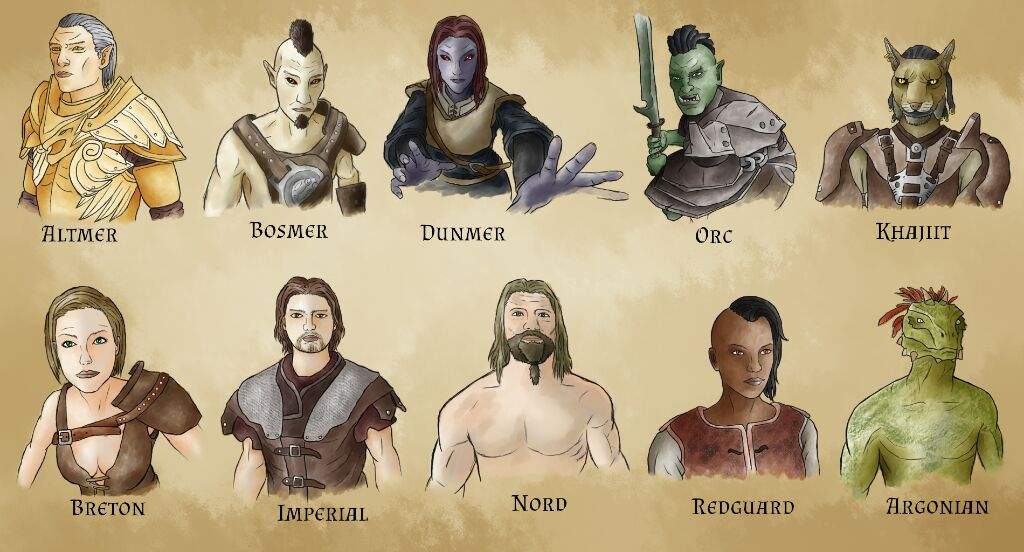
I’ve recently published a three-post miniseries adapting the humans, elves, and other interesting folks from the Elder Scrolls series of computer games to GURPS. Now I want to talk a bit about how I did it!
These three posts, and the One-Post Skyrim adaptation that preceded them, were the first time in a while where I was able to fully exercise the approach to adapting video games that I outlined as one of the very first articles on this blog. And the mini-series in particular was where I tried some new things, and I feel it’s worth talking about these things.
Researching the Source Material
Everything I said way back when in Adapting Videogames still reflects the way I think about this process. Fiction takes precedence over original mechanics, and I get to pick and choose from both in case they contradict themselves.
For One-Post Skyrim I had just the one game to look at, but for Peoples of Tamriel I needed to cast a wider net. Elder Scrolls is a sprawling, decade-spanning franchise, where these contradictions are bound to come up a lot more often. So how did I deal with it?
My “original sources” here were all the mainline games of the Elder Scrolls franchise, as described by the Unofficial Elder Scrolls Pages wiki1. That’s still a huge amount of data, and it’s positively filled with all those contradictions I mentioned above.
Most of them are mechanics-based. Basically, each game in the series differs as much from its predecessor as, say, D&D 3.0 is from AD&D, at a minimum. I decided to narrow the field down a little by looking at what changed and what remained constant between games. Things that changed every game were obviously less important to replicating its “feel” than things that stayed the same.
The big invariant here is the core gameplay loop: in every game, you wander and explore the world. You are given quests by NPCs, or discover them through other means. You enter dungeons, fight the enemies inside, and loot their treasure. There is a “main quest”, but you can choose to ignore it in favor of faffing about doing sidequests or simply raiding dungeons as you come across them.
You might remember I wrote pretty much the exact same thing during One-Post Skyrim. That’s because these things remain as true in Skyrim as they were in Arena2. All of it is very “high level” stuff, and does not require any specific tabletop mechanics to replicate, which is awesome for me. But how about the specific mechanical details? When it comes to playable character origins, the list of invariants is surprisingly small: you can choose from several. That’s it! The exact composition of the list and what each origin’s traits are changes significantly from game to game.
Adapting the Peoples of Tamriel
In the end I opted to use the list from Skyrim, which is both the most complete and the most popular of the franchise (it’s also used by Oblivion and Online). And when statting them up, I did two things: I avoided using the word “race” as much as possible, and I didn’t give them any attribute adjustments or mandatory mental disadvantages. This has the benefit of making these templates feel very “Skyrim”-like, since that’s also the way Skyrim does things. But there were other reasons why I chose this approach.
There’s an article out there that says it much better than I can, but unfortunately I’ve lost the link to it. Basically, the way racial attribute adjustment works in systems like D&D reinforces character stereotypes in a way that could be considered racist if it was applied to real-world people. Calling these bits of character creation races doesn’t help either, since that word has a lot of baggage from the real world.
GURPS Dungeon Fantasy doesn’t suffer from this to the same extent with attribute adjustments, since the cost of a racial template is small compared to the player’s total point budget. It does however, kinda fall prey to it when it comes to racial advantages and disadvantages. The bigot who says “all cat-folk are lazy spazzes”, or “all dwarves are hard-headed greedy bastards” ends up kinda having a point when those traits are a mandatory part of their templates.
I didn’t really want to play in a setting where bigots have a point, even about entirely fictional populations. I’m pretty satisfied with the final result: all the templates felt flavorful, and their traits didn’t force players to pick a particular profession over another as much. Players who want to hew closer to the cultural stereotypes about a given people could pick from the list of optional “Other Traits”, and could even pick optional traits listed under a different template for extra variety.
This worked out fairly well in my case because all the different people of Tamriel have roughly the same shape and size. GURPS is a system that places a lot of value on realism, so I imagine I would still need to keep some physical attribute adjutments in there if I were to include pixies and half-giants in the lineup. However, in systems or campaigns where that matters less even those wouldn’t need adjustments. I plan on keeping this approach with any other such templates I make.
-
Adaptando Videogames
Esta é a versão em português do post Adapting Videogames. Siga o link para ler a versão em inglês!
Antes de eu começar todo aquele negócio de Dragon’s Dogma, eu gostaria de discutir o próprio processo de adaptar um video game. Vai me ajudar a explicar minhas decisões.
O excelente GURPS Adaptations contém muitas informações valiosas sobre como adaptar ficção tradicional para uma campanha de GURPS. Muitas delas são igualmente aplicáveis à adaptação de um video game, mas eu sinto que há algumas considerações adicionais igualmente importantes. Elas são relacionadas ao gameplay.
“Gameplay” é um termo que engloba tudo o que o jogador faz em um video game, assim como os mecanismos que governam essas ações. Jogos diferentes lhe dão diferentes níveis de acesso a esses mecanismos. Um jogo de plataforma permite que você desenvolva uma intuição sobre a distância máxima dos seus saltos, e um RPG eletrônico te mostra uma quantidade imensa de números.
Ficção não tem “gameplay”. Mesmo o mais longo dos romances de fantasia com a mais detalhada descrição de seu sistema de magia nunca vai fazer com que seus leitores façam mais do que ler o texto para descobrir o que acontece a seguir. Video games são o exato oposto disso. Mesmo o mais imersivo e narrativo dos video games vai sempre exigir que você preste tanta atenção ao gameplay quanto à história e ao cenário.
Se você acha que isso lembra muito o processo de conversão de um sistema de RPG para o outro, está começando a entender!
Essencialmente, o processo de adaptar um video game para uma campanha de RPG de mesa apresenta todas as dificuldades de adaptar a ficção e também todas as dificuldades de converter material entre sistemas diferentes!
Quanto mais transparentes as mecânicas originais do jogo são, paradoxalmente, mais difíceis elas tornam o esforço de adaptação. Ao adaptar mecânicas, quer de um video game quer de outro RPG, é muito fácil cair na armadilha de tentar convertê-las tão detalhadamente quanto possível. Isso pode ser um exercício intelectual interessante, mas raramente gera um resultado simples e prático.
Minha estratégia preferida é confiar nas forças do sistema “de destino” tanto quanto possível, adaptando a ficção e tentando recriar as mesmas sensações passadas pelas mecânicas originais sem travar nos detalhes. Sempre que as mecânicas conflitam, a ficção tem precedência. Com jogos que são parte de uma franquia, eu escolho um subconjunto das informações do cenário e das mecânicas que pintam o retrato mais coerente (ou pelo menos o retrato do qual eu gosto mais).
No final, eu espero ter uma moldura de campanha que é divertida de jogar e que se encaixa no idioma do GURPS. E espero que condordem comigo sobre o resultado :).
subscribe via RSS