Posts
-
Where I Read the 4e Monster Manual/Vault: Behemoth
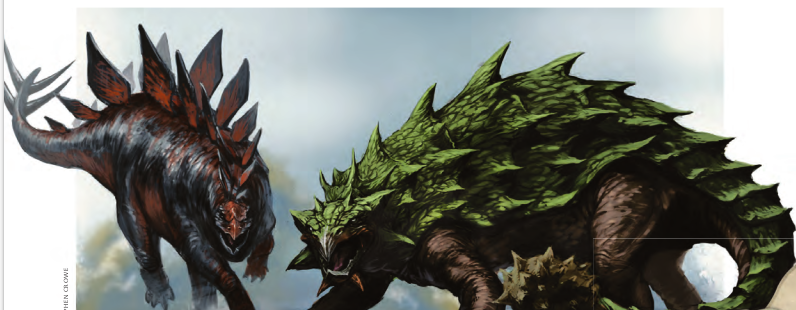
Bloodspike behemoth (left) and macetail behemoth (right). Copyright 2008 Wizards of the Coast This article is part of a series! Go here to see the other entries.
Let’s get this out of the way right now: behemoths are dinosaurs. Dinosaurs have been a feature of D&D at least since the X1 module for BECMI, but as far as I know the new nomenclature is new in Fourth Edition.
While I don’t know for sure why the authors decided on the name change, I can speculate. On Earth we call dinosaurs by Latin/Greek scientific names because we only known them through scientific studies - the creatures themselves became extinct millions of years ago.
The world of D&D, however, is not Earth! They never spoke any Latin or Greek there. And in the setting implied by the Monster Manual, dinosaurs never went extinct. So naturally people who interact with them would come up with common-usage names for them. Another benefit of the alternate nomenclature might be that it frees authors to diverge from currently accepted science a bit. I’ve seen people get strict about it when the “dinosaur” terminology starts getting thrown arround, even in D&D monster books.
The two behemoths presented in the first Monster Manual are described as omnivirous reptiles that live in herds and use their size and ferocity to drive out threats and rivals. Both are Large Natural Beasts, with the “reptile” keyword and Int 2. “Reptile” doesn’t come with any attached mechanics (like “aquatic” does), but I imagine some other monsters might have powers that interact with it. They’re only on the Monster Manual.
Macetail Behemoth
This one resembles a real-world ankylosaurus. D&D macetails are ill-tempered and territorial on the wild, but if raised from hatchlings they can be domesticated for use as pack animals. They’re Level 7 Soldiers with 82 HP, and fight with their tails. Their basic attack is a Tail Bludgeon that marks, and they can sweep their tails on a Close burst 1 that targets Reflex, and knocks Medium or smaller targets prone on a hit (in addition to doing damage). The sweep recharges on 4-6.
The specification that the targets must be Medium or smaller is a bit unusual. After all, that covers every possible PC, so it’s theoretically unnecessary. I imagine it’s there in case the PCs have their own domesticated behemoths or other giant allies on their side.
Bloodspike Behemoth
AKA stegosaurus. Also fiercely territorial, with an even fouler mood than the macetail. Even domesticated bloodspikes (used to pull heavy loads or siege engines) are difficult to train and control.
They’re level 9 Brutes with 118 HP, and also fight with their tails. The basic Spiked Tail attack does ongoing damage, and they also have the same Tail Sweep attack as the macetails. In addition to the usual Recharge 4-6 on the sweep, they get to do another one as a free action when first bloodied.
Encounters
The suggested encounter is level 7 and has a troop of troglodytes (shaman+muscle) using a macetail behemoth as armored support. It’s a all-reptile theme group!
Personally, I’d also add behemoths to human or elven forces. Maybe that merchant caravan you were hired to protect is a train of macetails instead of the mules you’d normally expect, and when brigands attack keeping the beasts from going berserk is as much of a challenge as the fight itself.
-
Skyrim Metalurgy Makes No Sense
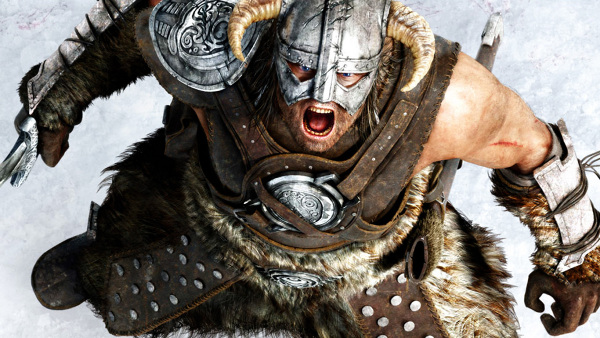
(image source) It’s true! I mean, it’s common for fantasy settings to have items made of one or more fantastic materials in them, but Tamriel (the setting of Skyrim and other Elder Scrolls games) goes the extra mile by naming its selection after completely different real-world materials. So you get things like high-end armor made from “refined malachite”, which in our world is also known as “copper”.
GURPS takes a more realistic approach, so when adapting this stuff to GURPS you need to modify it a little. Here are some Tamrielic cultures written in a format similar to the one shown in GURPS Dungeon Fantasy Treasures 1: Glittering Prizes, and slightly modified to fit better with GURPS DF. Page references are given for published game effects, and full stats are given to new ones.
I’m mostly basing myself on Skyrim here, since that’s what I played the most. Any differences between the material below and official lore can be either born of my ignorance of the overall setting or a change I made on purpose to fit what I find interesting.
The Nords of Skyrim
These are pretty much your standard off-brand Vikings. Nords were some of the first humans to arrive on the continent of Tamriel, sailing into frosty Skyrim from even frostier Altmora thousands of years ago. They typically value martial prowess and distrust magic, though there are also plenty of peaceful or mystically-inclined Nords.
Present-day Nord artisans usually disdain fancy or “impossible” materials, placing greater value on the skill that goes into making an object. Clothing is sturdy, warm, and predominantly made of wool and cotton. Fancier attire tends to be quilted, vividly dyed and/or trimmed with fur. Jewelry consists of rings, chains or amulets made from precious metals and often jeweled. Cold-weather gear made mostly from furs is also a common sight.
Weapons and armor are mostly made from plain old steel. Nords like one-handed swords and axes, usually wielded with round medium shields. Spears (1- or 2-handed) are also popular, with regular and long bows being the premier ranged weapons. Armor tends to be mail, scale or plate, and is often fur-lined for extra protection against the cold. This gear is commonly decorated with carved reliefs of spiral patterns, or with motifs depicting wolves, bears and eagles. Nords love horned helmets, though they prefer the look of curled ram horns rather than the straight ones usually depicted in more cliche Viking imagery.
Ancient Nords were similar, though they were bigger fans of magic. Many ancient weapons that survive to this day are enchanted or feature “impossible” embellishments like solid quicksilver inlays. Some ancient Nord smiths even made weapons and armor entirely from that material. Ancient Nord decoration often features a dragon motif in addition to the others present in modern day items.
Game Statistics
Fur-Lined: Fur-lined armor acts as winter clothing, removing HT penalties to resist FP loss from cold. Even if the GM isn’t using detailed rules for that, they can still declare that such protection is required to enter particularly inhospitable places (like the Ice Caverns of the Frost Wyrm). +1 CF.
Most Nord gear has no inherent CF or reaction modifier, particularly in a campaign set in Skyrim or whatever your world’s own Nord-land is. Fine-quality and Ornate +1 gear is relatively common, though.
High Elves
The High Elves of Tamriel, also known as the Altmer, enthusiastically live up to every “snobby elf” stereotype. As a culture, they see themselves as direct descendants of the gods, trapped in mortal flesh when the world was created. This often manifests of a disdain for the other, more “worldly” peoples, and as a distressing tendency to form ruthless elven supremacist organizations.
Unlike the Nords, High Elves go all in on using fancy or impossible materials for everyday items. Clothing tends towards regal robes of elaborately woven and dyed silk with gold thread embroidery, featuring wing, bird, and solar motifs. Gold jewelry is prized, particularly rings, earrings and hair ornaments. “Fake it till you make it” is the order of the day among high elves that can’t afford the genuine article.
Elven armorers eschew ferrous metals in favor of bronze, and will prefer to use more “magical” substances like refined moonstone or tempered glass if they can get their hands on them. Their preferred weaponry runs to fencing weapons and fancy polearms, as well as composite bows. For armor they like shiny mail and light plate suits. Wings and solar disks or rays are also common decorative motifs for elven armor and weapons, either carved in relief or inlaid in gold or solid quicksilver. Gilding is also quite popular.
Note that the leven of ornamentation of a piece of elven gear doesn’t have anything to do with its quality - it’s quite common for very ornate pieces to be of otherwise standard quality.
Game Statistics
Altmer bows and mail armor always carry the Elven modifier. Elven “mail” here is actually light plate armor. It has the same DR and weight, and can have modifiers that apply to plate armor.
Bronze: In Dungeon Fantasy bronze weapons and armor have exactly the same stats and price as their steel equivalents. They’re just, well, bronze-colored.
Refined Moonstone: Magically reinforced aluminum! This is an “implausible material” like those found on DF 8 or DF Treasures 1. It’s conductive but not flammable. Items made of refined moonstone have a silvery, pearlescent color. +4 CF.
Tempered Glass: This is described in DF 8 for weapons. Plate or scale armor can also be made of tempered glass. Such armor has +6 CF, is neither flammable nor conductive, and makes you look like you’re wearing a Tiffany lamp.
High Elven gear has no inherent CF modifier, though it’s usually expensive because of all the ornamentation it carries. In places and times where those elven supremacist organizations are around, wearing Altmer gear gets you a -2 reaction penalty from pretty much everyone. Unless you happen to be a High Elf yourself, in which case other High Elves (only) will not react at a penalty.
Dark Elves
The Dark Elves of Tamriel, also known as Dunmer, hail from the distant ash-choked plains of Morrowind, a place with little metal but plenty of monstrous giant bugs. As such, many of their durable goods tend to be made out of chitin and bone rather than metal or stone.
Dunmer clothing is made out of tough fabric, dyed in drab or dark tones. Fancier outfits are more colorful and have arabesque patterns made using embroidery or block printing, and might include elaborate hats. Weapons and armor are made out of expertly molded chitin or bone more often than they’re made of metal, and it’s pretty much inevitable that they’ll be “decorated” do look like bugs or skeletons due to that.
Game Statistics
Chitin: Chitin armor tends to be smooth and slightly shiny, and is usually brown or black in color. There’s a bewildering variety of giant bugs in Morrowind, so any leather, scale or plate armor can be made from chitin. +1 CF.
Bone: Described in DF 8 and DF Treasures 1.
Items of Dunmer make have no inherent CF modifiers. People unfamiliar with chitin and bone armor might react to the wearer at -1 or worse.
The Dwarves
There are no Dwarves in Tamriel. For some reason the whole civilization just up and vanished centuries ago, leaving behind a whole lot of ruins filled with automaton guardians and other still-functioning machinery.
There isn’t any dwarf clothing left to describe - as far as the surviving accounts go, no one saw them wear anything but heavy armor. Dwarven weapons and armor, as well as most of their durable goods, are made of an advanced metal alloy no one else knows how to produce. It can be molded in a standard forge just fine, though. This makes raiding dwarven ruins for their metal fittings a profitable, if risky, endeavor. All of these items are often decorated with engraved geometric patterns made out of straight lines. Ancient dwarven helmets look like sculpted faces - in fact, people in full dwarven plate don’t look much different than one of their constructs.
Dwarves seem to have favored one-handed maces and axes, used with heavy metal shields. For ranged combat, they used crossbows of varying complexity.
Game Statistics
Dwarven weapons and armor always have the Dwarven modifier where applicable. Genuine Dwarven antiques can be sold at an extra +3 CF to collectors.
The Orcs
Elder Scrolls Orcs are not considered monsters, and have been a part of civilized society for a long time. Still, they love fighting even more than Nords do, and a significant percentage of them are devout worshippers of the God of Having a Chip on Your Shoulder.
Traditional orc clothing is made from light and breathable fabrics, dyed in bright colors and some times adorned with quilting or embroidery. Brimless cylindrical hats are commonly worn by men. “Hardcore” orcs go live in isolated enclaves where they embrace the “Barbarian Hero” aesthetic of crude hide and canvas tunics and loincloths. Both types of orc take immense pride in their ability to craft weapons and armor, though.
Orcs favor nasty serrated blades as weapons, and elaborate suits of plate for armor - preferrably spiked. The more ornate versions have extensive and elaborate arabesque reliefs. Orc armorers never use exotic materials solely for decoration, but they have great love for meteoric iron and orichalcum due to their useful properties. Orcs take their smithing quite seriously, and orc-made gear has a higher than usual chance of being Fine-quality or better.
Game Statistics
Orc gear has no inherent CF modifier or reaction bonus.
Serrated weapons are presented in DF Treasures 1, and spiked armor is in DF 1 or Adventurers.
-
Let's Read the 4e Monster Manual/Vault: Beetle
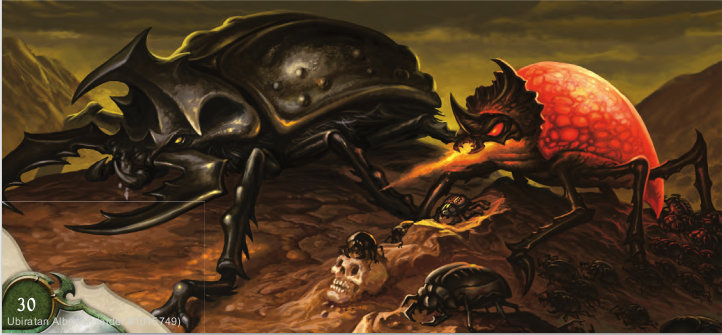
Tangler Beetle (left), Fire Beetle (right) and Rot Scarab Swarm (along the bottom). Copyright 2008 Wizards of the Coast This article is part of a series! Go here to see the other entries.
Monstrous beetles are some of the most traditional opposition for low-level adventurers, so it’s no surprise they show up here. I was sure they’d have an entry in the Monster Vault, but it turns out they’re MM-only. We get three monstrous beetles in this entry, all of them Unaligned and possessed of Int 1, the minimum possible value.
Fire Beetles are the most traditional beetles of all. In my experience their name often made people think they had some sort of fire attack in previous editions, but it actually referred to the fact that they glow. Well, here they finally get their fire attack!
4e Fire Beetles are Small Natural Beasts and Level 1 Brutes with 32 HP. They bite and can use a Fire Spray (recharge 5-6) that does fire damage in a Close Blast 3. Defensively, they have Resist 10 Fire. And yes, you can still extract the glowing glands from a dead fire beetle and use them as torches.
Tangler Beetles are one of the many beasts often tamed by humanoids and used as guard animals. They’re Large Natural Beasts and Level 5 Controllers with 62 HP. They have a bite basic attack, and a ranged Entangling Spittle attack that does no damage but immobilizes the target.
Rot Scarab Swarms are the first swarm monster we’ve run into in this book, and are a good showcase of the swarm rules. Individually, they’re normal-beetle-sized and native to areas tainted by the Shadowfell (making them shadow beasts).
The scarab swarm counts as a single Medium creature, a Level 8 Soldier. It has a Swarm Attack aura 1 that allows it to make free basic attacks against anyone who begins their turn caught in it. That basic attack is a necrotic “Swarm of Bites” that also does ongoing necrotic damage, and they get to attack normally in their action as well. They take half damage from melee and ranged attacks, and 10 extra damage from close (burst/blast) and area attacks.
The sample encounter is level 1, a trio of kobolds and their two pet fire beetles.
Final Impressions
I like that Fire Beetles finally get a fire attack. I seem to remember them having one in Neverwinter Nights, but I’m not sure if they had one in actual 3.x D&D. I’m fairly sure they didn’t have it earlier than that.
Rot Scarabs are a nicely creepy addition to a crypt-themed dungeon. They’re undead-adjacent but not undead themselves, so I guess encountering them can be somewhat surprising for PCs. Including them in a fight against undead is a good way to make sure the cleric can’t shut the whole opposing force down with a single turning attempt.
-
Let's Read the 4e Monster Manual/Vault: Bear
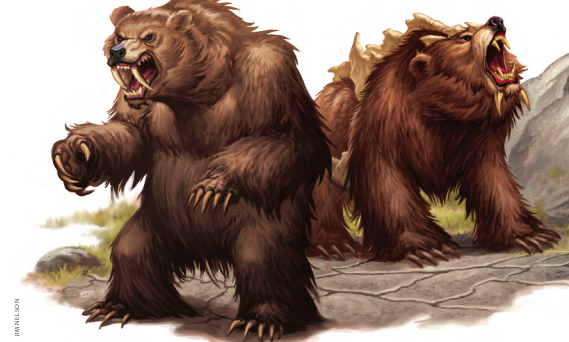
Cave bear (left) and Dire Bear (right). Copyright 2008 Wizards of the Coast We have bears in the real world, so they don’t require much in the way of introduction. D&D has always included a variety of bears in its bestiaries, their various real-world species lending themselves well to the “pallette swap” approach preferred by its older editions.
After going through a few Monster Manual-only entries, we finally arrive at one that exists in both books. The Monster Vault has an appendix with stats for mundane animals, likely a response to complaints from traditionalist players that the original Monster Manuals didn’t include any.
But wait! If the Monster Manual doesn’t have anything on mundane animals, what does it say about bears? Let’s find out.
The Lore
They’re bears. Large, omnivorous, inhabit temperate or colder areas. I wasn’t aware of it until recently, but it appears the “Bear Lore” entry in the Monster Manual is kind of a running joke among 4e players. It’s structured just like the lore entries for weirder monsters, so it ends up telling us a PC needs to succeed at a DC 20 Nature check to know that bears attack with their claws.
IIRC, while real-life bears can be dangerous, they usually don’t go out of their way to attack humans, so most bear encounters will be peaceful. Of course, this being D&D, you can encounter some bears that don’t exist in real life and that are far more ornery.
The Numbers
Combining the two books gives us three different bears: a mundane Bear (MV), a Cave Bear (MM), and the ever spiky Dire Bear (both). All are Unaligned natural beasts and have Int 2.
The Bear likely represents a brown bear. It’s Large, and a Level 5 Brute with 80 HP. It attacks with its claws, and can use a Bear Grab about twice per fight (it recharges when the bear is bloodied). This allows it to make two claw attacks against the same target, and if either one hits the target drops prone and the bear grabs it if it has fewer than two creatures grabbed. This ain’t no normal bear hug. At the start of the bear’s turn, it deals automatic damage against any creatures it has grabbed.
The Cave Bear is meant to represent a species that’s extinct in our world. It’s a Level 6 Elite Brute with 170 HP, but for some reason it’s only Medium. It’s more of a striker than a grappler: aside from its claws, it has a Cave Bear Frenzy that does claw damage in a Close Burst 1 and recharges on a 5-6. That’s a bit less multi-strike ability than I’d expect from an elite monster, but not too much less.
The Dire Bear follows the “bigger and spikier” theme set for dire animals in Third Edition. The Monster Vault version is merely an update of the Monster Manual, so I recommend using that one in all cases. It’s a Large Natural Beast and a Level 11 Elite Brute. Its basic attack are its claws, but it will rarely use that. The Dire Bear’s real go-to ability is Maul, which is at-will and allows it to make two claw attacks. If both hit the same target, the bear grabs the target if it has fewer than two creatures grabbed. This grab requires a secondary attack in the MM version, but not in the MV one. The bear can also use a standard action to deal lots of automatic damage to a grabbed creature (that’s where you use its action point).
Suggested encounters in the MM are: Level 6, two cave bears and one bugbear strangler (“us bears gotta stick together!”); and level 11, 1 dire bear, 1 ettin spirit-talker, and 3 ogre minions.
Final Impressions.
Well, they’re bears. While there’s nothing terribly exciting about them lore-wise, they do their job mechanically (particularly the Monster Vault variants).
One thing that might be fun is to have an evil druid as a villain, using charmed bears to do his bidding. Have the party be on the receiving end of the Aggressively Hegemonizing Ursine Swarm for once.
-
I Learned Something About Fighter Planes
I’ve been playing a lot of Ace Combat 5 and 7 lately, so I have fighter jets in the brain. And today I learned something I’d never have thought was possible from looking at the way those games or RPGs like GURPS model them.
Apparently, modern fighter planes are so fast they can shoot themselves down by outrunning their own cannon fire! Implausible, you say? Well, if you read this bit of news you’ll see that it actually happened in January of this year with an F-16, and that there are records of at least one other incident from back in 1956 with a Grumman F-11.
The gist of it is that shells are fired from the aircraft’s cannon at a speed equal to that of the aircraft plus their muzzle velocity, as you’d expect. However, they’re quickly slowed down by drag, so it’s possible for a plane flying at high speeds to accelerate past the bullets it just fired and maneuver itself into a position to be hit by them.
GURPS and most RPGs just tend to treat projectiles as having infinite speed. A character shoots, and the bullet flies out to its maximum range before the end of that character’s turn. This is a pretty decent approximation for the type of combat that usually happens in these games, which is between people on foot and at relatively short ranges. GURPS Tactical Shooting does have some additional rules for projectile flight time, but those are optional and mostly meant for snipers1. None of the existing rule sets contemplates the speed and ranges involved in jet age air combat.
Do we need specific rules for this hazard? I would say not. It’s even more of a niche situation than long-range sniping, and the bookkeeping required to track it would not be all that fun even in a realistic game about air combat. No, what we have here is an excellent result to use if someone rolls a critical failure on a Gunnery or Pilot test. Even if you go on to become the Ace of Aces, your squadron-mates will forever embarass you with stories of that one time you shot yourself down.
-
Who are famous for not moving at supersonic speeds. ↩
-
subscribe via RSS