Posts
-
GURPS X-COM: Operation DARK JUDAS, Part 3
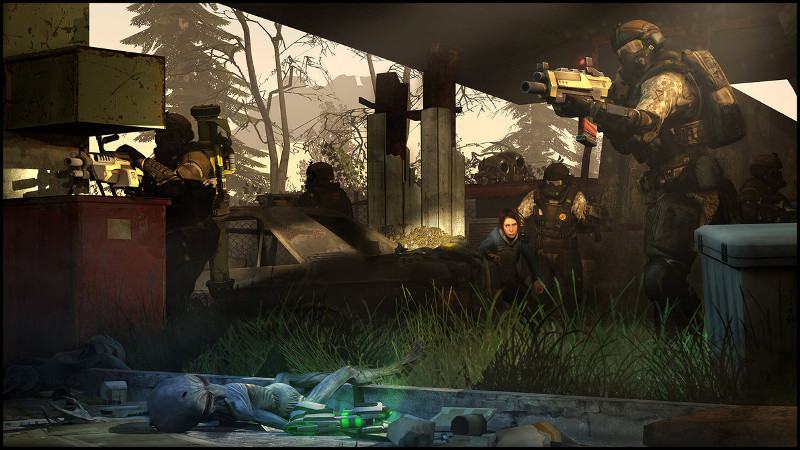
Illustration by AntiMingebag on DeviantArt Welcome to another mission report for GURPS X-COM: Noises in the Dark! Our characters for this mission are:
- Kendall Fairbarn: A paranoid hacker from the UK. Was completely convinced human society had been heavily infiltrated by shape-changing aliens… and it turned out he wasn’t entirely wrong.
- Minette Duvall: A bomb-disposal expert from Southern France, Minette is also quite handy with a rifle. She’s devoutly Catholic and swears a lot when faced with danger, which is all the time. Currently wounded and minding the Skyranger as an NPC.
- Niu Yulan (AKA Julia Yulan): A former hostage negotiator from China, built without a template but approaching a shootier Face. Her innate kindness and empathy came in handy in several of the missions! Currently controlled by Minette’s player.
- Jack Choi: A former police detective from Hong Kong, and a staunch adherent of the “kick down the door” school of policing despite his light frame.
- Sam McCall: A brave and burly former US Army Ranger, run by a new player.
White Masks
In our last post, Strike One approached a crashed UFO and found itself witnessing a large firefight between unknown factions. They were too far away to positively ID either of them, and so after a brief discussion on what to do decided to sneak closer to get a better look.
Heading east while keeping to the cover of native vegetation, the squad approached the former Samarco building currently occupied by the grey-clad people they saw from afar. On the way they sneak past a couple of rusted, empty containers which have been abandoned close to the edge of the woods. Turning a corner on one of the containers, they almost bump into a Tree of Woe growing flush against its wall! Taking care not to touch the tree, they observe the building, now only 30m away.
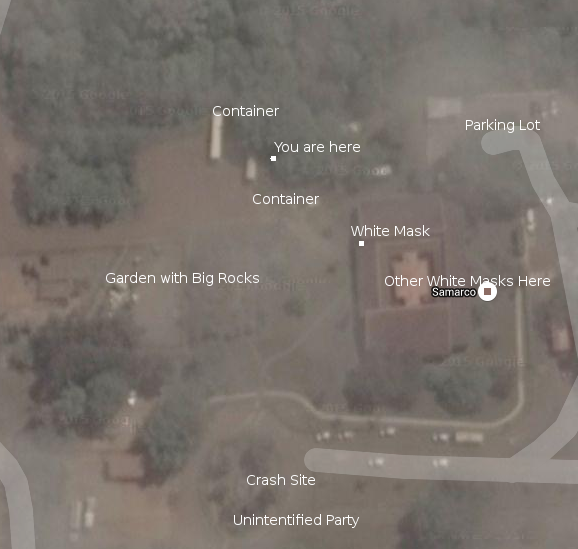
Annotated map of the scene. The squad recognizes its occupants as Puppets of Ruin from the way they move, but their equipment is different from what they’ve seen so far. The grey outfits are some sort of futuristic armor covering their whole bodies, with a white faceless helmet or mask covering their faces and skulls.
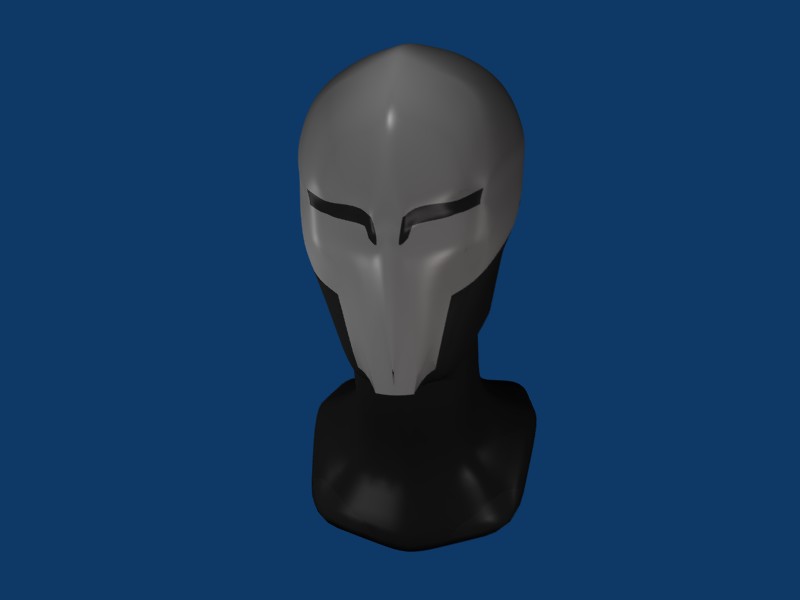
Kinda like this, but eyeless. Some of the puppets have painted ghastly smiles on their masks, but other than that they’re completely featureless. Their weapons are rifles capable of automatic fire, with underbarrel semi-automatic grenade launchers. As for the other side, they’re still about as far away as they were before, so the PCs can’t ID them.
It takes about a minute for the squad to observe all of this, which is when they notice one of the white-masked puppets stop shooting at the other party and raise a hand to where its ear would be in a gesture not unlike that of an Agent from The Matrix. It then looks directly at the party, despite there being no way it would be able to spot them from its current position!
As that puppet begins to raise its weapon in the direction of the party, they hear wet slapping sounds behind them, and turn to see that tree near the container dropping another three-puppet fireteam! The newcomers are close enough to attack with their swords, and they do just that.
Strike One is able to shoot them dead in short order, but the time it took for them to do that was enough for the masked puppet to aim and fire its grenade launcher, greatly damaging their cover and stripping the surrounding foliage bare.
The squad elects to begin a fighting withdrawal through the woods back to the north. Julia and Sam fire away at the “White Mask” as the others retreat, and though they’re pretty sure they managed to hit its center of mass several times, it doesn’t seem to react at all. The return fire sounds more like tearing silk than gunfire. Several of the bullets hit Julia and chew through her trauma plate, with at least one getting through and wounding her.
Blue Mask
The PCs retreat behind one of the steel containers, and manage not to get shot again even as White Masks’ buddies join in on the fun. The shooting stops momentarily when a titanic explosion erupts from somewhere to the south, and as its roar subsides they can hear a faint whimper from within the neighboring container. Choi and Kendall throw some smoke grenades to give them some concealment, and then Choi and Julia move to investigate the other container.
Inside, they find an alien! They almost shoot it out of reflex, but stop when they notice this one doesn’t seem to be a combatant. Unlike the puppets, this individual is 1.5m tall at most, wearing a skin-tight dark grey outfit and with a skin or carapace of a very dark purple, two legs and four arms. Its face is vaguely human, but it’s a bright royal blue and has a prodigious nose reminiscent of a crane’s beak.
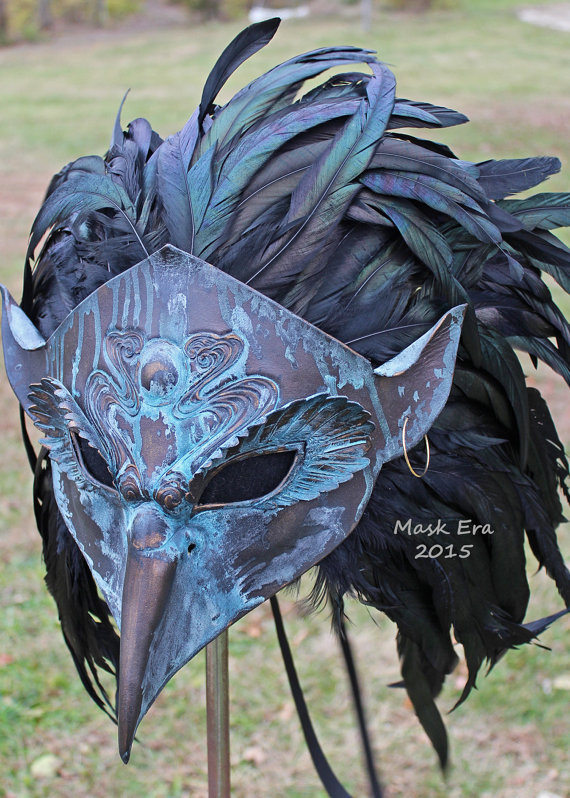
Kinda like this. The alien is huddled in close to the container’s north end from where Julia and Choi comes in, and as soon as it spots them it raises its two top arms and shouts “Sparing us!”. Julia lowers her weapon and manages to talk to the creature, who becomes quite relieved when it sees the squad is friendly and that they bear the X-COM insignia on their uniforms. It’s apparently been looking for them! It’s obvious to the PCs that escorting this real live alien back to base is now their top priority.
There isn’t much time to talk, however, as three White Masks are quickly making their way to the squad’s position. Kendall pops more smoke in an attempt to delay them, but the alien warns in its peculiar dialect that it doesn’t work. The squad begins retreating to the Skyranger with their new charge in a tense game of cat and mouse with their three pursuers, which not only are better equipped than the “newborn” puppets they’ve been facing but are also much more tactically savvy. Their armor also seems to make them largely immune to even the PC’s assault rifles!
Choi then remembers the alien RPG they stashed a ways away, and runs ahead to fetch it and lie in wait. Though they experience a couple of scary close calls, the rest of the squad manages to lead the puppets to the trap and clear out before Choi fires the surprisingly light alien launcher and obliterates the three puppets.
With that done, there’s no further obstacle between them and the Skyranger. They strap themselves and the alien in, and take off, concluding the operation.
The spoilers and fight analysis for this operation deserve their own post, since they would make this one run too long. And after that, we’ll see what consequences this operation had on the campaign’s strategic layer.
-
State of the Octopus: April 2017
I did a Year in Review post back in January, but haven’t looked at the large picture since then. Today I decided to take a look at my Google Analytics stats from April to see how I was doing. How many people read the blog, where do they come from, and what do they access the most?
April saw 379 sessions from 244 unique visitors to Octopus Carnival. That’s slightly less than I had in March. Brazil and the US are tied in first place for the single largest source of sessions, at 120 each. Most of the others come from the UK and Canada, with the remainder split between several European and Southeast Asian countries, each of which contributes a handful of sessions.
The single largest source of referrals to Octopus Carnival is Facebook, with 94 of them if you combine desktop and mobile domains. Google searches are only slightly behind that, with the SJ Games forums taking third place. What’s interest about Facebook’s popularity is that I only announce new posts there on a couple of Portuguese-language groups. I confess I didn’t expect to be that popular with my fellow countrymen, though I guess you could say that I’m not very popular at all since I didn’t even manage to hit four figures in a whole month.
The most accessed page by far was the blog’s homepage, which I think means most readers go there to read the latest article. Second and third place go to Part 1 of the Operation DARK JUDAS report and the introduction to Let’s Read Hell’s Rebels, which is kind of amazing because they were posted close to the end of the month. I guess people really like those topics!
If I want to increase my readership (purely for ego-boosting purposes, as this blog is strictly non-commercial), then it seems the next logical step would be to post announcements to an English-language GURPS group on Facebook. I’m not sure how effective that will be, since it seems the English-speaking GURPS community tends to congregate on the SJ Games forums and on G+, and I already post there. But we’ll see! A generic roleplaying group might be a useful place to post as well.
-
Let's Read Hells Rebels: The Player's Guide

This part of a series! Go to the project page to see all entries.
When reading an adventure in this way, it’s useful and fun to imagine a group of PCs going through them, and try to figure out how they can tackle each challenge. Who should make up our PC party here? Let’s read through the Player’s Guide and find out what the game expects of us.
The Hell’s Rebels Player Guide
Out of all the books in this adventure path, the Player’s Guide is the only one that’s free. You can find it here. It begins with a partial account of the background for this adventure path.
I already talked about the background in my last post, so I’m going to skip it here. Let’s go through the other sections in the book based on the titles I see in its PDF index.
Character Tips
This part of the book is meant to guide players on how to create appropriate characters for this campaign. Pathfinder is a system with a lot of moving parts. Base Classes! Archetypes! Prestige classes! Skills! Feats! This section goes over each of these and points out which ones would work best. In typical Pathfinder fashion, it doesn’t explicitly forbid anything, but it does point out in a roundabout way that not following these recommendations will lead to a sub-optimal experience.
The gist of the thing, and the part most useful to someone converting this to GURPS, is that Hell’s Rebels is a mostly urban campaign with strong elements of intrigue. Your PCs should be able to operate well in a city, and should be good at subterfuge and socializing. They’re also supposed to take charge of a rebel organization, so leadership skills would also be strongly recommended. It goes almost without saying that there will be plenty of combat in the campaign, so your party should have that covered as well.
This section also presents rules for activities they expect to be common in the campaign: concealing your religion (several Good faiths are outlawed), deciphering old documents, and hiding bodies.
There’s also a section on religion, describing how the cults of the core Golarion deities operate in the city and how the Thrune government sees them. Generally, the closer to Chaotic and Good a deity is, the more outlawed their faith is in Kintargo. Even those Good faiths that weren’t officially outlawed got hit with arson and assassination prior to Barzilai officially taking power. As long as your PC doesn’t worship an outright Evil deity, they’ll have a reason to rebel on religious grounds if nothing else.
Reasons to Protest
The first scene in the adventure is a protest, and this section lists possible reasons for the PCs to be there. Yes, actually protesting the government is one of these reasons, but they could also be looking for a missing celebrity they’re a fan of, looking for a contact with information on the Silver Ravens (see below) or just tagging along to keep another PC out of trouble. Each choice gives minor bonuses for that scene only.
Campaign Traits
This one should probably have appeared before Reasons to Protest, as the information here provides some much needed context for some of those reasons. Each PC is supposed to pick a trait, and they both tie the PC to the setting and give them bonuses to paper over the deficiencies in Pathfinder’s skill system (such as making a skill important to the campaign a class skill for the character, or boosting their Charisma for the purposes of one rebellion-related activity).
Milani
Milani is the Chaotic Good patron of rebels and hope, and this bit contains some additional mechanical benefits for worshipping her. I imagine the other gods get these in other Pathfinder books.
Kintargo At a Glance
This section contains information any PC living in Kintargo would know, some of which I already touched upon in my last post. The Chelish Civil War gets a lot of mentions - that’s the period of strife following Aroden’s death and ending with House Thrune in power. Kintargo only submitted grudgingly, and has remained a particularly rebellious place ever since.
There’s a list of all the significant factions in Kintargo, and there’s quite a few of them. They can be generally divided into factions friendly to Thrune, rebel or dissident factions (most of which got hit pretty badly) and neutral factions which can go either way as the campaign progresses.
Then there’s a stat block for the city of Kintargo itself! After that we get to a fairly long list of locations, all marked in a city map. I imagine most of them will become significant at different points during the campaign, so I’ll probably discuss them in the detail when they come up.
And finally, we have some publicly known info on Barzilai Thrune. Unlike the politician I’m obviously satirizing, this campaign’s villain sports a spartan buzz cut and apparently never took a lover in his life. He does have a tendency to fly into an incoherent rage over the smallest annoyances, though.
The Silver Ravens
The Silver Ravens were listed among the factions of Kintargo, and mentioned in passing several times before that. They’re an old secret society that defended Kintargo from outside threats as far back as the Chelish Civil War. They sorta faded away after that, and if any members remained today they were killed by Barzilai’s goons. They’re still important, though, since the PC’s goal for the campaign should be to re-establish the Silver Ravens and use them to liberate the city.
This section provides complete campaign-specific rules for statting up and running the organization. It tracks the size and influence of the rebellion with a character-like level chart, using its number of supporters as XP. Each level gives the PCs a personal benefit. There’s a whole strategy minigame where players can recruit specialized “units” that can perform specific actions, and so on. PCs will be able to make use of these special actions to obtain an edge in the various dungeon delves in the adventures themselves.
GURPS Conversion Notes
If you plan to run this in GURPS, I would recommend using the Dungeon Fantasy rules as a base. The “gist” of the character creation guidelines applies here too: your PCs should either start with social, subterfuge and leadership skills, or should be able to quickly acquire them with earned points.
Like all adventure paths, this one assumes the PCs start at first level. 250-point delvers are quite a bit more powerful than that, so GMs who feel like replicating that “level one” feel should use the 125-point templates from DF 15. Personally, I would go with the full 250-point templates, as I’m somewhat tired of low-level challenges and like to get through them as soon as possible. The differences between the two systems and the characters power levels will interact with the adventure in an interesting way, with several challenges become easier and some becoming harder.
Character progression can be handled in one of several ways. You could give them one character point whenever the original rules give out “story award” XP, and use the system in DF 3 to award CP for fights. You could also just give a larger sum whenever the PCs fulfill important story goals. Either way, the resulting progression is likely to be somewhat slower than in D&D, but faster than in a typical GURPS game.
It’s probably safe to ignore the minor mechanical bonuses given under Reasons to Protest and Campaign Traits. They seem to be there because not all character classes have access to the skills marked as important for the campaign, which isn’t a problem in GURPS. The GM should instead allow all PCs to spend points in the equivalent GURPS skills! The story aspects of those traits are still interesting, however, and might be useful as inspiration.
As for the “rebellion management system”, it seems to be entirely centered around skill checks. This means an enterprising GM could simply replace the Pathfinder skill checks with GURPS tests and use the whole thing mostly as-is. Another interesting alternative would be to come up with a system based on GURPS Boardroom and Curia and/or GURPS Social Engineering: Pulling Rank.
So Who Are Our PCs?
It’s my understanding that the standard party size in Pathfinder is four, and the cover of the first adventure helpfully suggests we use Valeros the Fighter, Lem the Bard, Merisiel the Rogue and Kyra the Cleric. Some interior illustrations depict other characters, but these four are particularly appropriate among the Iconics because their alignments are at most one step away from Chaotic Good, and Lem in particular is all about opposing Cheliax. I also happen to have ready-made stats for all of them, so that’s another plus!
Picking out campaign traits for them is a bit trickier than I anticipated, but not as important as it would be in Pathfinder because there are no mechanical effects. “Gifted Satirist” fits Lem well, and “Natural Born Leader” would fit Valeros because he already has the Born War Leader advantage. Kyra, somewhat counter-intuitively, would get “Star-Struck”. She’s not quite a fangirl, but Shensen the half-elf singer was one of the most prominent worshippers of Sarenrae in Kintargo, and she vanished during Thrune’s purges (which also saw her shop/Sarenrae shrine burned down). Merisiel gets nothing. The opportunity to pick some pockets and shank some dottari gives her more than enough motivation to join in. Lem and Kyra would have ample reason to travel to Kintargo, with the other two tagging along out of friendship.
In my estimation, this party is vastly stronger than their 1st-level Pathfinder equivalents would be. Not only because they’re built on more points, but because having a fighter in your party is not a handicap in GURPS - quite the contrary! Aside from combat power, each of them has several useful skills: Valeros is, well, a Born War Leader; Lem is an adept socialite; Kyra can serve as his backup; and Merisiel brings those ever-useful thief skills to the table. Magic-wise, Lem has incredible utility (including the ability to read minds) and Kyra can See Secrets in addition to the usual sun-cleric tricks of healing allies and burning enemies. In the next post, we’ll begin going through the first adventure in the path, the absurdly named “In Hell’s Bright Shadow”.
-
GURPS X-COM: Operation DARK JUDAS, Part 2
Illustration by AntiMingebag on DeviantArt Welcome to another mission report for GURPS X-COM: Noises in the Dark! Our characters for this mission are:
- Kendall Fairbarn: A paranoid hacker from the UK. Was completely convinced human society had been heavily infiltrated by shape-changing aliens… and it turned out he wasn’t entirely wrong.
- Minette Duvall: A bomb-disposal expert from Southern France, Minette is also quite handy with a rifle. She’s devoutly Catholic and swears a lot when faced with danger, which is all the time. Currently wounded and minding the Skyranger as an NPC.
- Niu Yulan (AKA Julia Yulan): A former hostage negotiator from China, built without a template but approaching a shootier Face. Her innate kindness and empathy came in handy in several of the missions! Currently controlled by Minette’s player.
- Jack Choi: A former police detective from Hong Kong, and a staunch adherent of the “kick down the door” school of policing despite his light frame.
- Sam McCall: A brave and burly former US Army Ranger, run by a new player.
Puppet Theater
In the previous post, we saw how Strike One had a rough landing in the blighted iron mine that comprises their Area of Operations. That firefight left Minette wounded, so she decided to stay behind to help guard the Skyranger. The rest of the squad pushed forward, going through the abandoned security checkpoint to the west of their landing zone and then south following the road.
The 2.5km along the road to the crash site wouldn’t be a significant obstacle to this squad, but it would be a long enough stretch of time and space that I decided a random encounter roll was appropriate. Yes, a random encounter! The Dreams of Ruin are from a book written for old-school D&D, and I couldn’t let all those wonderful tables to go waste! The level of Dream activity around here meant I had to use the “Edge of the Forest” tables, and as for the result…
About halfway through the trek, they spot a particularly large Black Tree growing on the middle of the road. Around it was a large group of puppets, prostrating and contorting themselves as if in worship. That it was Christmas Eve in the real world when this happened was entirely a coincidence! This was an instance of “Puppet Theater”, which is just what it sounds like: the Puppets of Ruin put on spooky displays in places where an unwary traveler might watch them. Why? Only they know.
Like all the other trees, this one had human bones scattered around its roots, and this particular bunch of puppets had left their weapons in a pile nearby. After some discussion, the squad decides to sneak through the woods at the edge of the road, get as close as they can and open up with Sam’s grenade launcher followed by rifle fire. The plan goes off without a hitch and they manage to take all the puppets out before they can react. I messed up a bit here, since the explosion did damage the trees and this should have caused another wave of battle-ready puppets to drop, but by this point I just wanted to move forward and get to the main set piece.
I did make sure to point out the pile of shiny, intact alien weapons just lying there, which made the PCs a bit paranoid. They checked around it, poked them a bit, and came to the conclusion that there was no booby trap or anything - the weapons were indeed just lying there. In truth, the Forest in that region kinda wanted them to take the weapons. It was an attempt to win them over, sort of, and of course carrying these things elsewhere would also spread spores.
The squad proceeds to take one of each weapon, but instead of trying them out they stash the lot in the nearby woods and blow the rest up with a grenade, treating them more as samples to take home than new equipment. On the one hand, good on them for resisting this temptation! On the other, they’re sure going to miss that RPG launcher in the next scene…
Visage of Ruin
The squad proceeds along the road, and passes by one of the huge reservoirs that were used to store mine tailings for processing. It’s basically a huge pit dug into the earth and shored up by dams where needed. This one is 1km from north to south and 500m from east to west, and though it’s not the one whose dams burst it still presents a horrifying sight.
The floor of the pit is grayish brown and scarred by the toxic sludge that was regularly dumped in it. A little of that sludge still pools at its southern end, making a shore of sorts. The scale of the thing makes it hard for the PCs to not stop and stare, and that of course is when they notice the trees. The anomaly in there was so strong that even Strike One, inured as it was to the effect, took a while to pierce it. The whole pit is teeming with Trees of Woe, and they look right at home rising out of the toxic ground. It’s a disquieting sight, but there’s nothing they can do about it now.
Continuing on, the squad spots a building at the end of the road. From about a hundred meters away, it looks like it was originally a fairly practical structure, single-story, brick walls and metal roof. It’s been defaced in a manner similar but more deliberate to that of the buildings in Cologne. All the windows are broken, alien graffiti covers the walls, and there’s this ropy white stuff hanging everywhere. That’s Bakegumo webbing, but the PCs didn’t know it at the time.
They’re close to the crash site not, but don’t have eyes on it yet, as it’s still a small distance to the southeast and currently obscured by vegetation. They do hear gunfire and explosions coming from that direction, and after some quick discussion on what to do decide to sneak east through the woods to take a closer look at the situation.
Traversing the dense subtropical vegetation is difficult, but thankfully it’s all Earth-native. They get through and to see a large open landscaped area, ringed with fancier looking (but also defaced) buildings and criss-crossed by roads. The crashed alien craft is right in the middle of a small roundabout in the center of the area, and it looks like… a house. It’s built in a style that’s a cross between a Chinese junk and a miniature Taj Mahal, but it’s clearly a house, and it’s still somewhat intact despite crashing. Since the craft is about eighty meters away from the squad they can’t see much more detail, but there are definitely people in it, human-looking, wearing white-sleeved clothes, having a firefight with the occupants of a building 70m to the east of the squad. Those people wear gray.
Now that’s an interesting situation! Who are these two sides? Can the squad trust any of them? What the heck is going on here? Find out on the next installment!
-
Crafting Imbuements in Gransys
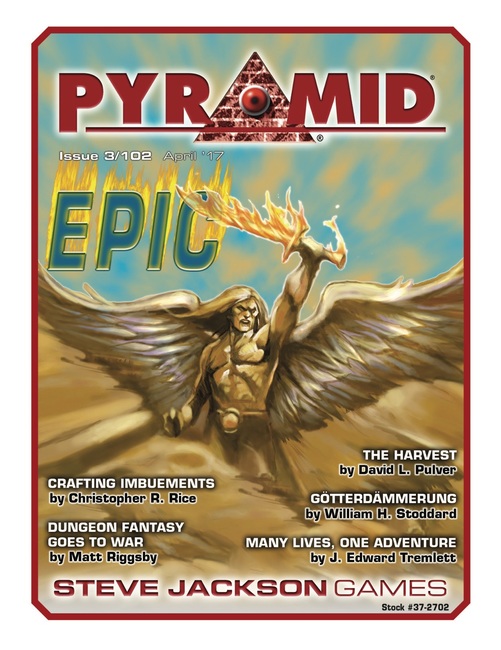
Pyramid #3/102 was recently published, and it contains a system for making magic items that would be an excellent alternative to the one I wrote for the Dragon’s Dogma setting! It has the advantage of better fitting the theme of “master crafters using alchemy to improve equipment” that I was going for, and it uses the Imbuement system in a way that doesn’t bog down fights
The system can be used mostly as written, with only a couple small changes required to make it fit in Gransys. The Imbue advantage necessary for the process always has the Alchemical (-10%) modifier.
- A piece of gear can be improved after its creation! Use the original item’s value, unmodified by pre-existing Cost Factors, to calculate the cost of the new change.
- The special components described in my post can be used to pay up to half of the imbuement’s cost, using the same rate. They also reduce the time necessary for Infuse Gear by a similar rate, and if the PC provices enough components to completely cover the cost the infusion could be done by the same day. The artisan would still charge half its price in that case, though.
And since it’s possible to improve the base quality of pre-existing gear in Gransys, the following skill would make itself necessary:
Refined Gear (General; IQ/VH)
This skill improves the mundane quality of a piece of gear. Cheap gear becomes Good quality, Good gear becomes Fine, Fine Gear becomes Very Fine. The change in CF is the same one for buying an item of that quality.
Modifiers: +2 to make a Cheap item Good; -5 to make an item Very Fine. Jumping multiple quality levels in one sitting requires multiple simultaneous uses of this Imbuement at the usual -1 penalty per use.
subscribe via RSS