Posts
-
Psi-Wars: Golko Wants You Dead

Image source. I’ve been following the creation of the Psi-Wars setting on Mailanka’s Musings with great interest, and it’s no secret that this project was one of the inspirations for me to start my own blog. In fact, as I write this I am also in the process of starting up a short Psi-Wars game on RPG.net! Someone else proposed the game, and I stepped up to GM it.
The setup is going to be something I saw used long ago for a Star Wars one-shot using Wushu: there’s this crime lord named Golko, and he wants all the PCs dead for some reason. Their only hope is to team up and take Golko down. In addition to creating a character as normal, each player has to both state the reason Golko wants their PC dead, and tell me one true thing about Golko. In other words, they collaborate to create the adventure’s antagonist.
Our PCs are:
-
Jatuu Harhlohuan, a Felinoid and former arena slave turned Psi-Knight. Only time will tell if she will follow the path of True Communion or fall to the lure of its Dark side.
-
Lady Maya Afolayan, a noble-born Fighter Ace who pretends to run her family’s shipping concern while looking for wrongs to right in the Galactic Rim.
-
Captain Scarlet Crimson of the Crimson Corsair, a space pirate with a heart of gold and a quirky robot crew.
-
Paul “Patch” Patterson, Scarlet’s chief engineer, who can deal with technology using both mundane skills and psionic powers.
The other important character in this story is Golko, of course. Not all players have posted the required answers, but so far he’s turning out to be a nasty piece of work. I’ll post his description when I have all the information I need.
-
-
Dragon's Dogma Bestiary: Cyclopes
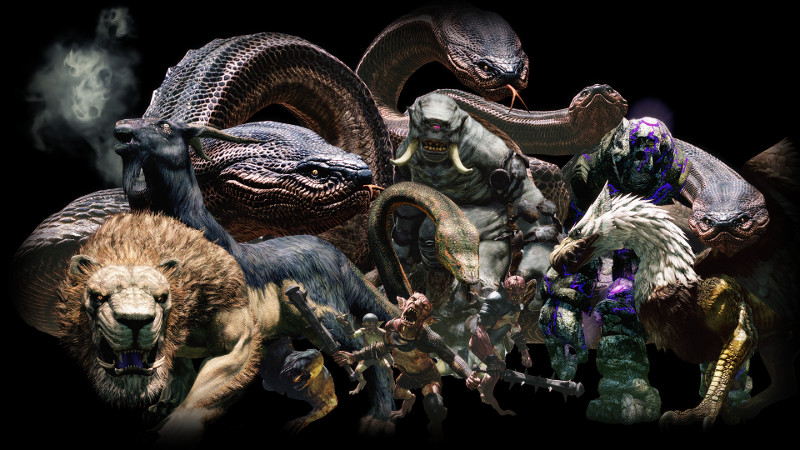
Illustration Copyright 2012 Capcom. The typical cyclops is a humanoid around 6 meters tall, whose wrinkled, grayish hide resembles that of an elephant. Also like an elephant, its mouth sports a pronounced pair of tusks. Unlike elephants, however, cyclopes are carnivorous and quite stupid. They are commonly spotted slowly shuffling around in the distance, sluggishly moving towards anything that smells of food. They are a particular terror to herds of cattle, and cyclops sightings usually prompt armed response from concerned local lords, who will usually try to drive the beasts away rather than attempting to slay them and may resort to adventurers or pawns if their own forces fail.
Scholars can only speculate about the life cycle of these creatures. No one has ever seen more than two of them together, and the rare slain monster has no reproductive organs to speak of. They probably originate from beyond the rift, though no one knows that their native world looks like. What is known from bitter experience is that cyclopes seem to have an unexplicable fondness for goblins and their kin. Large goblin invasion forces use them as living siege engines, equipping them with armor made from enormous, crude iron plates.
Cyclopes like to use whole tree trunks as clubs, and they are not shy about scooping up pesky humans at their feet and taking a bite out of them. They tend to prefer Telegraphic Attacks, and are particularly vulnerable to attacks that target their Will, HT or single eye.
ST 30; DX 11; IQ 5; HT 11;
SM +3; Dodge 8; DR 2;
HP 30; Will 8; Per 8; FP 11
Basic Speed 5.50; Move 6;
- Punch (12): 3d-1 cr. Reach C-2.
- Tree Trunk (12): 6d+2 cr. Reach 1-3.
- Bite (12): 3d-1 imp. Reach C.
- Grab (12): Grapples at ST 31.
Traits: One Eye; DR 2 (Tough Skin); Teeth (Fangs); Gluttony (9); Bestial;
Class: Mundane.
Other Cyclopes
Dwarf Cyclops
This smaller variety lacks the tusks, and is “merely” four meters tall. This means they can fit inside larger caves, and often take shelter there. Other than being slightly smaller and less strong than its cousin, its stats are pretty much identical.
ST 25; DX 11; IQ 5; HT 11;
SM +2; Dodge 8; DR 2;
HP 25; Will 8; Per 8; FP 11
Basic Speed 5.50; Move 6;
- Punch (12): 2d+1 cr. Reach C-2.
- Tree Trunk (12): 6d-1 cr. Reach 1-3.
- Bite (12): 2d+1 imp. Reach C.
- Grab (12): Grapples at ST 26.
Traits: One Eye; DR 2 (Tough Skin); Teeth (Fangs); Gluttony (9); Bestial;
Class: Mundane
Gorecyclops
Found only in the deepest, most forsaken pits, the Gorecyclops is larger, faster and smarter than your average cyclops. Over three stories tall, they aggressively engage any who dare trespass into their territory, and attack relentlessly and with surprising skill. They also go berserk when wounded! The fiercest of these monsters are said to be forever chained beneath the earth for some transgression committed at the dawn of time.
The one good thing about them is that they hate goblins just as much as they hate everyone else, so you’ll never find them willingly cooperating with anyone.
ST 60; DX 11; IQ 8; HT 13;
SM +4; Dodge 8; DR 2;
HP 30; Will 12; Per 12; FP 13
Basic Speed 6; Move 8;
- Punch (15): 8d+1 cr. Reach C-3.
- Tree Trunk (15): 10d+1 cr. Reach 2-4.
- Bite (15): 8d+1 imp. Reach C.
- Grab (15): Grapples at ST 61.
Traits: One Eye; DR 2 (Tough Skin); Teeth (Fangs); Gluttony (9); Bestial, Berserk (9).
Class: Mundane.
Armored Cyclops
Goblins like to encase their pet cyclopes in anything from large plates of crudely beaten iron to a large pile of stolen pots and pans. This adds 6 DR to all covered locations (usually the torso and legs). The most sophisticated warbands will fashion proper helmets for their cyclopes, protecting their eyes from attack. These add 6 DR to the face and skull, and add an extra -2 penalty to target their eyes through the slits.
This armor is usually fashioned to make the cyclops harder to climb (see below), giving an additional -2 penalty to such attempts.
Giant Climbing
Cyclopes and other monsters of similar scale can’t really be grappled by human-sized adventurers, but they can be climbed. Use unmodified Climbing skill for this, as the the folds of a cyclops’ skin are easy to grab hold of. The monster resists with its DX or best grappling skill as it tries to pry the adventurer from itself. It’s not a matter of strength for the cyclops, but of reaching the pest. The monster’s skill may be penalized if the adventurer is in a particularly difficult spot.
A PC who manages to get to a vulnerable spot in the monster’s body can attack it at no hit-location penalty using a one-handed weapon. A cyclops who manages to reach the offending character and pry them loose is now holding a convenient morsel in its hand, and will usually attempt to take a bite.
-
Dramatic Editing in GURPS

I’ve been somewhat lax in following the monthly themes proposed by the GURPS blogging community. Let’s see if we can change that! This month’s theme is “Luck”, so let’s see what I can do about it.
What is Dramatic Editing?
If I’m supposed to write about “Luck”, why did I title this article “Dramatic Editing”? That’s the name of a rule in the old White Wolf RPG Adventure!, which was about pulp heroes with special powers in the 1920’s. It used a variant of the Storyteller system, with a “power stat” named Inspiration. In addition to powers specific to their character types, all PCs in Adventure! could pay points of Inspiration to change the narrative around them. In-character, this looked like lucky coincidence, but mechanically it was a conscious decision by the player. The less plausible the change was, the more Inspiration it cost. This rule was called Dramatic Editing.
Hasn’t This Been Done in GURPS Before?
Why, yes! GURPS has several different sets of rules that strongly resemble Adventure!’s Dramatic Editing. Let’s count them.
In the Basic Set alone, we have:
-
The Luck family of advantages, which allow periodic re-rolling certain tests and picking the best result. Higher levels increase the frequency in which this can be done.
-
Super Luck, which allows the player to outright dictate the result of a roll, once per real-time hour.
-
Serendipity, which is very similar to Dramatic Editing but with more GM control and less guidelines as to what’s possible. Each level of the advantage gives one “use” per session.
After that we have GURPS Power-Ups 5: Impulse Buys, which is a whole supplement on the different ways you can spend character points to buy immediate effects. Of particular interest there are the mechanics for Buying Success on p. 16, which at the extreme end can turn a critical failure into a critical success for 5 CP.
Building on that we have the expanded mechanics for Wildcard Skills that debut in GURPS Monster Hunters 1: Champions: for every 12 points spent in a wildcard skill, you also gain a “point” that can be used for Buying Success on rolls of that skill.
These mysterious “points” never had an official name until the Impulse Control article in Pyramid #3/100, which called them Impulse Points and gave us a rule set for purchasing them as advantages.
With that many alternatives, why I am even writing this post? Most of various official mechanics don’t really feel unified. If I wanted a game where Dramatic Editing was central, having several of these mechanics in place would be confusing, especially for new players. I also don’t like that the default Impulse Buys rule requires permanent expenditures of character points. The rules associated with Wildcard skills are nifty, but they require bringing Wildcard Skills into the campaign and that isn’t always appropriate.
If I was to use a single official rule set for this, it would be the one from the Pyramid article, but I find even it to be a little too finnicky. You have to pay for your Impulse Point pool and for its refresh rate separately, which means your group can have PCs with different refresh rates. The idea of Villain Points from the article is also pretty good, but making them a fixed disadvantage that also has an individually adjustable refresh rate makes them both predictable and difficult to track.
This can only mean one thing: time to come up with my own system!
Comic from XKCD by Randal Munroe. Dramatic Editing, GURPS Edition
This system is meant for campaigns where dramatic editing is a major feature. Its use replaces any other traits meant to represent luck, plot protection, or lack thereof. It is inspired several of those traits, by the Dramatic Editing rules in Adventure!, and by similar systems found in a few other games.
Note that these rules use “dramatic” units of time rather than the more traditional GURPS measurements of sessions or periods of real or game time. I prefer to use these units because I often play via forum, where real time and sessions don’t have any meaning:
-
An adventure is a complete story with beginning, middle and end, bookended by significant periods of downtime. In a face-to-face game, it can take several sessions to complete!
-
A scene is a usually series of events taking place in the same location, or something like a single big fight, chase, or significant social encounter. It usually ends when the characters have some time to rest or when the context of their activities changes. A session usually has several scenes, unless the whole session is just one big fight.
The system is built around the following advantage:
Inspiration (15 points/level)
Whether you’re lucky or just that good, you often find things going your way. Each level of this advantage gives you an Inspiration Point (IP for short), which you can spend in the ways described in GURPS Power-Ups 5: Impulse Buys, or in Performing Dramatic Editing, below.
The GM defines how many levels of Inspiration you may buy in the campaign. 3 to 5 should be a typical maximum, depending on how cinematic the campaign is. This advantage is exclusive to PCs, representing the extraordinary luck or “plot armor” posessed by protagonists in heroic fiction. NPC adversaries use a slightly different system. Its use in a campaign implies the use of the rules described below, which apply to all PCs whether they have this advantage or not!
Regaining Inspiration
Inspiration Points can refresh in several different ways:
-
They always fully refresh at the start of every new adventure.
-
In the downtime between scenes of an adventure, you regain 1 or more IP depending on how long the downtime lasted, at the GM’s discretion. A five-minute break while running between fight scenes doesn’t refresh anything, while multiple days of R&R are always worth a full refresh.
-
You gain an IP for particularly good roleplaying during a scene and for heroic actions, at the GM’s discretion. Fortune favors the bold!
-
The GM may give your character 1 or more IP in exchange for inserting negative events into the narrative. Essentially, this allows the GM to buy success or use dramatic editing by giving points to the PCs instead of spending them from a pool.
Points gained through impressive heroics or GM dramatic editing can allow a character to exceed their Inspiration maximum, and even characters without the Inspiration advantage can make use of them! These extra points are lost when the scene ends, so there is extra incentive to use them immediately.
Performing Dramatic Editing
In addition to buying success or improving effect rolls, PCs can use Inspiration to directly alter the narrative around them. While this is a conscious decision by the player, and fueled by the PC’s Inspiration, the PC is not aware of this fact, and perceives this as a stroke of luck or fortunate coincidence. This is usually done to get the character out of danger, or to improve their odds against strong opposition. The more extensive and implausible the change, the more it costs.
Dramatic editing is always initiated by the player, unlike Serendipity, though the GM still may veto or alter edits that violate basic campaign assumptions, exceed the scope the player wants to pay for, utterly break suspension of disbelief, or which simply don’t contribute to making a fun and exciting session. Players should come up with plausible explanations as to why these things happened, and GMs are encouraged to ask for clarification if anything is in doubt.
In any case, using dramatic editing to cause problems for other players is forbidden!
Change Cost Minor Change 2 IPs Major Change 3 IPs Blatant Continuity Violation 4 IPs Extension 1 or 2 IP Additional Complication -1 IP Offscreen Change -1 IP Below are more detailed descriptions of the possible changes:
-
Minor Change: This change has a minor but not decisive impact on the character’s situation, improving their odds and perhaps giving them some room to breathe. It must be plausible given the current situation, and cannot contradict any established narration. It can do things like bring in plausible friendly NPCs as reinforcements, insert useful objects into the scenery, or give the PC an extra bit of equipment they forgot they brought (like the more specialized Gizmo advantage). The guidelines for standard Serendipity are good here, too.
Examples: There’s a loaded gun in a desk drawer in that penthouse executive office! These sturdy vines will make crossing that jungle chasm easier! Friendly police officers show up when they hear you fighting those mobsters near their station!
-
Major Change: This change has a decisive impact on the character’s situation, turning lost causes into decent fighting chances or perhaps saving the character’s life entirely from certain death. It can stretch plausibility somewhat, but it still cannot contradict established narration and must adhere to the campaign’s base assumptions.
Examples: There’s a parachute in that burning penthouse executive office! Those cops that showed up and arrested everyone know your PCs from way back and are willing to release them with a warning… this time. This idling, unlocked sports car that happens to be here is just what you need to give chase to the bad guys!
-
Blatant Continuity Violation: This change can directly contradict a previously established description, though it still might not violate basic campaign assumptions.
Examples: Turns out the building’s sprinkler system is working after all! The lab had a backup generator the bad guys didn’t know about! This unexplored jungle contains a ruined outpost full of supplies!
-
Extension: Allows a player to “hitch a ride” on an edit just performed by another player, having its effects apply to both PCs. Cost depends on the scope of the original change (minor extensions cost 1 IP, major ones cost 2).
Examples: That vine is a few inches lower than it seemed, allowing both PCs to grab it! There’s water enough for two!
-
Offscreen Change: The edit affects some place other than the one where the current scene focuses on. This means that it won’t be of immediate help, taking anywhere from 15 minutes to an hour of in-game time to have an effect. This reduces the cost of the edit by 1.
Examples: The cops will be here… eventually. That providential supply cache is a ways away.
-
Additional Complication: This change is a mixed blessing - it makes the PC’s life easier in one way, but complicates it in another. Doing this reduces the cost of the change by 1, and it’s equivalent to accepting a bad outcome from the GM in exchange for a point.
Examples: The cops fight the mobsters, but try to arrest you too! The life-saving supply drop fell on top of a nest of snakes!
Dramatic Editing vs. Buying Success
You might notice that even an immediate Blatant Continuity Violation without complications is cheaper than turning a Critical Failure into a Critical Success via the Buying Success rules. The downside of that is that Dramatic Editing is subject to much more GM scrutiny, as described above, whereas a player can normally just spend the IP on buying success and have the effects happen immediately. Generally, anything that could be explained by skill rather than luck should use the Buying Successes rules.
On the other hand, you might also have noticed that the ability to perform an edit equivalent to a standard use of Serendipity per session costs 30 points instead of 15! This is balanced by the fact that characters can recover IP mid-adventure via rest, good roleplaying, heroism, and accepting negative events proposed by the GM, and that this can allow them to temporarily exceed their maximum. And they could always spend those points in Buying Success instead if no good opportunities for “lucky breaks” present themselves.
Adjusting the Rules
The Dramatic Editing rules are purposefully written to a more “fuzzy”, narrative standard than what is usual for GURPS material, and rely a lot on GM and player judgement. GMs who feel that dramatic editing is too powerful as written are free to increase the costs, or come up with more concrete limits on what’s possible. One good way to discourage Blatant Continuity Violations is to set the maximum Inspiration level for the campaign at 3, ensuring that characters can only resort to that most extreme of edits if they surpass their maximum or accept extra complications or delays.
The idea here is that players should use Inspiration early and often. If your players consistently go over their maximums and stay there, you should either encourage them to use those points more often or reduce the amount of awarded points.
Compatibility with Other Systems
If you use Dramatic Editing in a campaign, you should forbid any other Basic Set traits that deal with luck, plot protection or the lack thereof. This includes advantages like Luck and Serendipity, but also disadvantges like Unluckiness, since players get a different sort of reward for allowing bad stuff to happen to their characters. Both forms of Destiny are also forbidden, since recent interpretations of it overlap with the Inspiration advantage.
Using this with “Wilcard points” might be possible, though it makes things harder to keep track of due to characters having several pools of points to spend. Points from Wilcard Skills cannot be used for Dramatic Editing, but can still be used as described in the original rules.
Using this with the Impulse Control rules is relatively straighforward! Simply allow players to spend Impulse Points on Dramatic Editing, using the same cost table and guidelines! This does replace the Serendipity advantage, but all other rules remain as in the article.
-
-
Operation BRUTAL ADVENT, Part 2
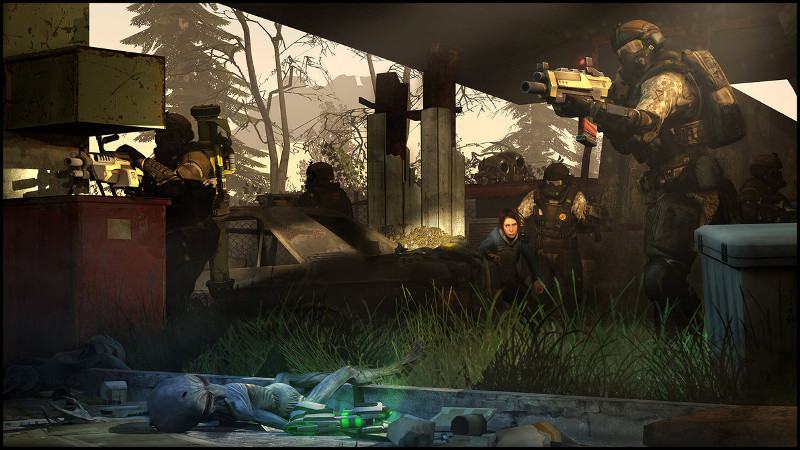
By AntiMingebag on DeviantArt Welcome to another installment on my GURPS X-COM: Noises in the Dark campaign report! Today I’ll continue to tell you about Operation BRUTAL ADVENT, our group’s inaugural mission. The following PCs participated in it:
- Kendall Fairbarn: A paranoid hacker from the UK. Was completely convinced human society had been heavily infiltrated by shape-changing aliens… and it turned out he wasn’t entirely wrong.
- Minette Duvall: A bomb-disposal expert from Southern France, Minette is also quite handy with a rifle. She’s devoutly Catholic and swears a lot when faced with danger, which is all the time.
- Niu Yulan (AKA Julia Yulan): A former hostage negotiatior from China. Julia is pretty handy with a rifle but her medical training and innate kindness are equally important parts of her arsenal.
- Jack Choi: A former police detective from Hong Kong, and a staunch adherent of the “kick down the door” school of policing despite his light frame.
The following NPCs also had important roles:
- Valenkov and Gutierrez: A pair of shooters from Russia and Argentina, respectively, both members of the squad who lost their players just before the start of the mission.
- Yevgeny Korsakov: The pilot of the squad’s Skyranger transport.
- Jan Wiest: A cop stuck in the anomaly zone. Together with his unit, he’s been fighting the aliens for months.
- Gisela Vahlen and company: Seven civilians inhabiting a building inside the anomaly zone. Three of them are relatives of Dr. Vahlen, one of X-COM’s top scientists.
Evacuation
After arriving on the scene and investigating the anomaly’s effects the squad managed to pinpoint its source in the St. Marien Hospital. They decided they will eventually have to get in there to stop all of this, but rescuing the civilians should come first. Choi is a little disappointed that they can’t just call in an airstrike and level the place.
Kendall manages to reach Korsakov, who tells them the Skyranger will be fully refueled in an hour, but that he can leave ealier if they don’t need to fly a long distance. Getting them heavier weapons would require flying all the way to HQ and back, though, which would take a whole day. The local military doesn’t want to share. The squad asks him to fly in ASAP in order to get the civilians out.
Korsakov says he’ll be there in 30 minutes, and calls again after that exact amount of time to request specific landing coordinates. He suggests the roof of a building just behind the one everyone is in, in the middle of the block. It’s lower than the surrounding structures, which should provide cover from snipers.
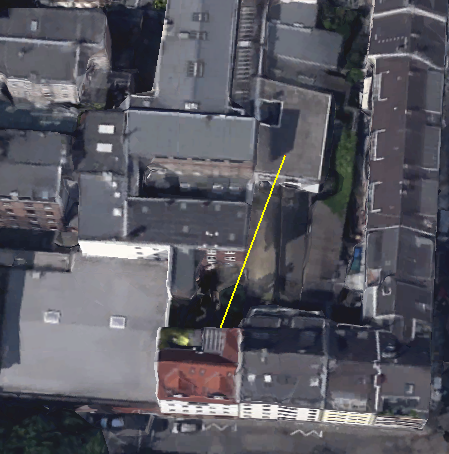
The LZ is at the top of the yellow line, the PC's location at the bottom. The PCs accept his suggestion, and having prepared to move out with the civilians in the last half-hour, begin to do so immediately. Just before they leave the apartment building, however, they get a worrying radio message from the pilot: “I see a weird light nearby. I will investigate.”
Ambush!
This is worrying because Korsakov is never supposed to leave the cockpit during an extraction, and he knows it. Before the party and the civilians have crossed half the courtyard, they see him exit through the ground floor door of the center building and head east at a brisk pace, flight helmet still on. In the direction he’s walking there’s an eerie blue light shining through an open second-floor window.
Choi and Kendall rush to the pilot’s side, and notice he’s obviously out of it, as if hypnotized. He doesn’t stop to talk to them, but doesn’t resist when physically stopped from walking. The others remain with the refugees, herding them towards the Skyranger, but Vasily shouts out a warning when he notices that the blue light is rapidly intensifying. In a second, a ball of fire shoots towards Choi! He dodges it, and it leaves a small frost-rimmed crater in the ground.
Minette pours suppressing fire into the window the shot came from, as Choi and Kendall drop smoke grenades for cover. Julia and the NPCs stay by the civilians as they run into the building. As the smoke grenades go off, a huge alien thing jumps out from the window to the left of the one Minette was shooting at, and disappears into the cloud. They only catch a brief glimpse, but it looks like a giant seven-fingered hand.
Kendall takes Korsakov’s hand and books it back to the Skyranger. The pilot, now recovered, is only too happy to run the rest of the way towards the safety of his cockpit as Julia and the NPC soldiers finish loading the civilians into the craft. Minette stands ready to shoot the alien if it gets close, but it’s hard to see into the smoke from this distance.
Choi stays near the smoke, intent on fighting the alien. He fires blindly into the cloud and hits it, but then the creature charges at him and pokes him in the chest hard enough to break some ribs despite his body armor. He won’t survive another hit like that!
Kendall runs back to the fray, followed by Valenkov and Gutierrez. The NPCs fire burst at it and score a few hits, which do a lot less damage than expected. The creature swipes at them with its fingers, but thankfully misses. It hits Kendall with another energy blast, but the hacker’s ridiculous armor loadout pays off, and he gets away with only a slight frost burn.
Valenkov manages to attract the alien’s attention for long enough to allow Kendall to stick a greande wrapped in duct-tape on its skin. They get clear, and the grenade finishes it off. This was their first official close encounter, and it was only one alien. How many more are there?
They would soon find out. With the civilians clear of the danger zone, it was time to plan the attack on the alien position at the hospital.
Spoilers and Fight Analysis
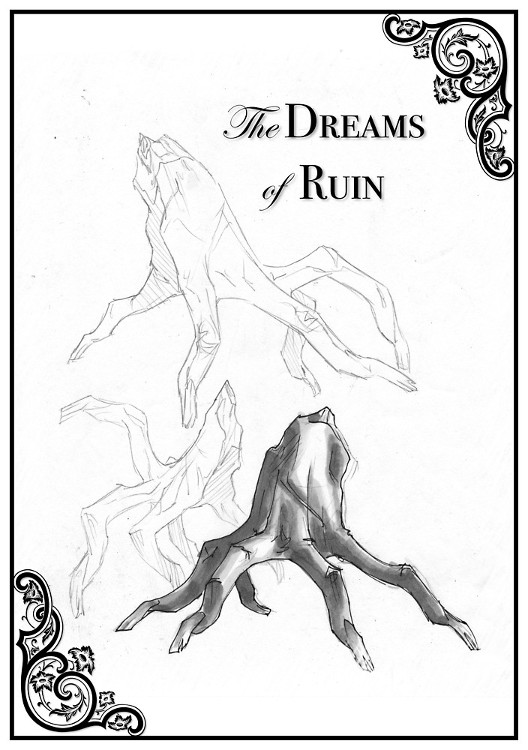
The monster of the day. Art by Melissa Uran. With the campaign already over, it’s safe to spoil you on the alien’s true nature. It was a Bakegumo (“goblin-spider”), a creature that’s an integral part of the ecosystem of the Dreams. They do indeed look like giant hands, though the seven-fingered part was a personal addition: it both made them weirder and referenced the “mystical” number seven, which I decided would be a recurring motif in the alien forces. After this encounter, the PCs named it “Rosie” - I never revealed any of the creature names in the Dreams of Ruin book, an encouraged players to come up with their own.
The original stats for Bakegumo gave then five hit dice, so my version of them is large and has exceptional ST and HP. It’s also Unliving, which explains why bullets didn’t do much against it. It retains all of the original’s supernatural abilities, so it’s a good thing no one was grappled by it. This one was a scout, and approached the building in the half-hour between the call going out and Korsakov arriving.
The party did an excellent job coming up with a plan to quickly evacuate the civilians: the longer they waited, the more aliens would converge on their position. Waiting the whole day for more ordinance would bring an overwhelming attack force a few hours in. Using the grenade at the end was also inspired, and worth the two uses of Gizmo it cost Kendall. Without that the fight would have been a lot longer and more costly for the PCs.
They made some mistakes as well: smoke grenades were a total newbie trap in this game, as the creatures of the Dreams see through a special psychic sense that completely ignores things that impair normal sight. There was no way to know this in the first mission, of course, but they would learn the aliens don’t rely on normal sight if they had autopsied any of them in the strategic interludes. Alas, this ended up not happening before the game ended.
-
Dragon's Dogma Bestiary: Gargoyles
Copyright 2012 Capcom. This post belongs to a series converting Dragon’s Dogma enemies to GURPS. All other entries, and all other posts adapting the setting can be found here.
Gargoyles in Dragon’s Dogma are pretty much what you’d expect from hearing the word: humanoid flying monsters with rock-hard skin and a love of clawing out the eyes of unwary adventurers. The gargoyles of Gransys are living creatures, with flesh and blood beneath that rock skin, so they add “hunting for food” to their list of usual reasons for attacking PCs (territoriality, plain cruelty, etc.). They also have an additional surprise in store: their tails are tipped by a stinger capable of injecting a petrifying poison into a victim. They can’t eat the resulting statue, but it’s still a good tactic for finishing off foes who put up more of a fight than anticipated.
Gargoyles dislike sunlight, and so make their homes in ruins and cave complexes, particularly those that feature one or more tall chambers full of good nesting spots. Someone suddenly attacked by a gargoyle in one of these dark places might confuse them with a harpy at first, only to be surprised at how little effect their blows have on the creature. Somehow bypassing a gargoyle’s DR is vital to effectively fighting it.
ST 17; DX 13; IQ 6; HT 13;
SM 0; Dodge 9; DR 9;
HP 17; Will 10; Per 12; FP 13
Basic Speed 6.50; Move 3 (Ground) / 13 (Air)
- Talons (16): 2d+2 cut or imp. Reach C. May also grapple at skill 16.
- Bite (16): 2d+1 cut. Reach C.
- Petrifactor (14): 3d imp + Petrifying Venom follow up. Reach C.
- Petrifying Venom (resisted with HT-5): Applied via a sting with the petrifactor, above. Targets who fail the resistance roll are turned to stone until cured with Stone to Flesh or similar magic.
Traits: Claws (Talons); DR 9; Flight (Winged); Night Vision 5; Striker (Impaling; Clumsy, -2 to hit); Striking ST 4; Teeth (Sharp); Bestial; Bully (9); Gluttony (9); Social Stigma (Monster);
Class: Mundane.
Notes: Gargoyles only use the petrifactor as a last resort, as they prefer to be able to eat the victim after killing it.
subscribe via RSS